Czech President Signs Medical Marijuana Bill; US Congress Warming up to Marijuana Policy Reform

President Vaclav Klaus signed into law Friday a bill that legalizes medical marijuana in the Czech Republic.

The bill had heavy support from both ruling political parties. It was overwhelmingly passed by the Czech Senate last month by a 67-2 vote after already passing the Lower House of Parliament in December.

The Czech Republic has some of the most liberal drug laws in the world, and is one of the most marijuana-friendly countries in Europe. Possession of up to 15 grams of marijuana, 1.5 grams of heroin, 1 gram of cocaine and 4 tablets of ecstasy and cultivation of up to 5 plants are a misdemeanor offense since January 2010.

Bipartisan group of Congressional members seek to reclassify marijuana for medical use, allow for ‘fair’ trials

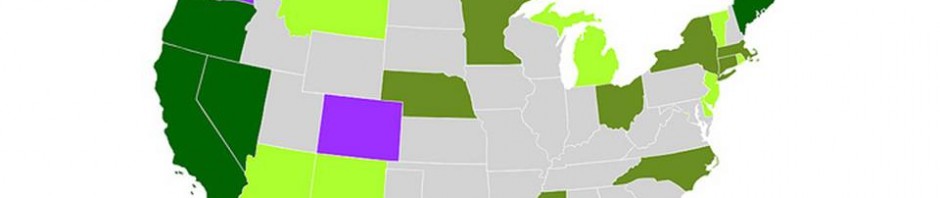
It used to be that congressmen Barney Frank and Ron Paul, both now retired, had pretty much the monopoly of drug policy reform in the US Congress, working together on a number of stillborn legalization bills. On the heel of the November marijuana legalization in Colorado and Washington, and as polls reveal strong support for state rights to decide their own marijuana policy, overwhelming support for medical marijuana and majority support for outright legalization, Congress appears to be finally catching up with its constituents. More than a dozen Members of Congress co-introduced legislation on February 14, that would reclassify marijuana for medical use and provide federal defendants the right to use state law compliance as evidence in medical marijuana trials, a right they’re currently denied.

Rep. Earl Blumenauer (D-OR) introduced H.R. 689, the “States’ Medical Marijuana Patient Protection Act,” that aims to reschedule marijuana, allows states to establish production and distribution laws without interference by the federal government, and removes current obstacles to research. H.R. 689 co-sponsors include Representatives Cohen (D-TN), Farr (D-CA), Grijalva (D-AZ), Hastings (D-FL), Honda (D-CA), Huffman (D-CA), Lee (D-CA), Moran (D-VA), Nadler (D-NY), Polis (D-CO), Rohrabacher (R-CA), and Schakowsky (D-IL). “Nineteen jurisdictions have passed laws recognizing the importance of providing access to medical marijuana for the hundreds of thousands of patients who rely on it, it is time for the federal government to respect these decisions, and stop inhibiting safe access,” said Congressman Blumenauer.

Rep. Sam Farr (D-CA) introduced the “Truth in Trials Act,” which seeks to overturn the prohibition on medical marijuana evidence in federal court.

Both bills were introduced in anticipation of the National Medical Cannabis Unity Conference, “Bridging the Gap Between Public & Policy” on February 22-25 in Washington, D.C. The conference will highlight medical and legal experts, Members of Congress and other policymakers. Monday, February 25 will be a lobby day with hundreds of patient advocates meeting their Members of Congress and asking for reform.

The move is part of a scheduled flurry of congressional activity from the expanding marijuana reform supporters in Congress. Representative Blumenauer had previously introduced on February 6 “The Marijuana Tax Equity Act” that would create a taxation framework for marijuana similar to that in place for tobacco and alcohol. On the same day, Representative Jared Polis, (D. Colorado) introduced the Ending Federal Marijuana Prohibition Act, that would call on the federal government to regulate marijuana much like it does alcohol.

While most of these bills are probably a long shot, they definitively heat up the debate and build up momentum for future battles. Even if President Obama is not likely to sign anytime soon a medical marijuana bill, not to mention recreational, the climate for marijuana policy reform has definitively changed on the banks of the Potomac, warming up considerably since last November.

As for the Obama administration, it has remained remarkably silent on the topic since November, which would actually be the best possible strategy if Obama had any genuine interest in marijuana policy reform. In the currently highly-charged and partisan climate that still prevails in the US Congress, the Obama administration would be well-advised to stay on the sideline and let Congress assume the initiative on such a charged issue. The issue even has some nominal bi-partisan support, which would most likely evaporate if Obama was to take a firm position on it.

Obama is the first US president who has the potential to really understand the issues of illegal drugs in a very personal and intimate way. While he consistently appeared reform-inclined prior to his election, his positions have been far more ambiguous since taking office. Was he careful not to be labeled as soft on drugs? By cracking down on marijuana dispensaries, did he intend to bring the War on Drugs to the Caucasian community? After all, if Caucasians were targeted even half as much as African Americans, the War on Drugs would most likely be over pretty soon.

There is little doubt that Obama truly gets the futility of criminalizing users as well, probably, as small time dealers; is he ready to concede the inanity of prohibitionist policies altogether? Drug policy activists generally expect some substantial changes during his second term. His administration’s response, or the continued lack of it to the Washington and Colorado legalization will undoubtedly give a clear indication of his deep-rooted intentions.
Jeffrey Dhywood
Investigative writer
Author of “World War D – The Case against prohibitionism, roadmap to controlled re-legalization”
www.world-war-d.com
“World War-D” on Amazon: www.amazon.com/dp/0984690409/
FaceBook: http://www.facebook.com/worldward
Twitter:@JDhywood
LinkedIn: linkedin.com/in/jdhywood
 

Drug policy on the move: 2013 as it unfolds

2012 appears increasingly as a turning point in the drug policy debate, and the trend seems to be accelerating as we move into 2013. I prepared a presentation of the major events of 2013 in the world as they unfold. The presentation is in reverse chronological order to highlight the most recent developments, and is followed by a recap of the major milestones of 2012 and the events that led to these major breakthroughs. I will keep updating it as we go.

Please let me know if I missed anything. Feel free to add your own events in the comments. And of course, like and share on social networks.

Jeffrey Dhywood
Investigative writer,
Author of “World War D – The Case against prohibitionism, roadmap to controlled re-legalization”

Download a free 50-page excerpt: http://www.world-war-d.com/.

“World War-D” on Amazon: http://www.amazon.com/dp/0984690409/
Facebook page: http://www.facebook.com/worldward
Follow me on Twitter: @JDhywood
Become a better informed activist and support global drug policy reform!
Order your own copy of “Word War-D”

  • The reference book on the War on Drugs and prohibitionism
  • A guide to psychoactive substances and substance abuse
  • A blueprint for global drug policy reform and controlled legalization

Media inquiries- book reviews – speaking engagements: contact promo@world-war-d.com

Reforma de la politica de drogas: Un repaso al 2012

2012 fue un año crucial y un momento crítico para la Política Global de Drogas. Un repaso de los eventos mayor de 2012 desde las declaraciones del Presidente de Guatemala Otto Perez Molina hasta la victoria por la legalización de la marijuana en Colorado y Washington.

Jeffrey Dhywood
Investigative writer,
Author of “World War D – The Case against prohibitionism, roadmap to controlled re-legalization”

Download a free 50-page excerpt: http://www.world-war-d.com/.

“World War-D” on Amazon: http://www.amazon.com/dp/0984690409/
Facebook page: http://www.facebook.com/worldward
Follow me on Twitter: @JDhywood
Become a better informed activist and support global drug policy reform!
Order your own copy of “Word War-D”

  • The reference book on the War on Drugs and prohibitionism
  • A guide to psychoactive substances and substance abuse
  • A blueprint for global drug policy reform and controlled legalization

Media inquiries- book reviews – speaking engagements: contact promo@world-war-d.com


Drug policy reform moving forward after holidays pause.

Support for marijuana legalization gaining momentum in the US

In the aftermath of the decisive victories for marijuana legalization in Colorado and Washington, recent polls conducted since then reveal a rapidly widening support for medical marijuana as well as full legalization, and this support is now reaching into the Southern states that have traditionally been strongly opposed even to medical marijuana.

A recent survey conducted in Hawaii, birthplace of president Obama and land of the “Choom Gang” and its “choomwagon”, reveals a stunning 78% support for a “tightly regulated dispensary system” and 57% support for controlled legalization. Hawaii is on a short list of states that might consider the state legislature route to marijuana legalization.

In New Hampshire, a state scheduled to legalize medical marijuana in 2013, support is 68% to 26% opposed, while support for full controlled legalization is 53 to 37 http://www.mpp.org/states/new-hampshire/2013NewHampshireResults.pdf

In Arizona, where the voters approved state’s MMJ program has been under siege from the start, support for MMJ stands at 59% while support for controlled legalization is 53 to 44. Arizona is expected to have a marijuana legalization initiative on the 2014 or 2016 ballot, although it would probably be a long shot.

More interesting, voters in North Carolina and West Virginia seems to be warming to the idea of medical marijuana, 58 to 33 in North Carolina, and 53 to 40 in conservative West Virginia.

Lawmakers in Maine, Massachusetts, New Hampshire, Rhode Island and Vermont have already promised to introduce marijuana legislation in 2013, and other are expected to follow, including  Alaska, Arizona, Hawaii, Michigan, Minnesota, Missouri, Montana, Nevada, Oregon and Virginia. Most of the proposals are likely to never even make it to a vote, and others will be defeated or vetoed; still, 2013 is likely to deliver a few more controlled legalization states, while the block of medical marijuana states will most certainly pass the 20 count and may even reach 25, at which point a majority of the US states would have legalized medical marijuana. A Medical Marijuana Bill was introduced in Kansas on January 16.

Meanwhile, on December 19, the National Institute on Drug Abuse released the results of the 2012 Monitoring the Future Survey, which indicate a continued rise in teenage use of marijuana with daily use at 6.5% among high school seniors and last month use at nearly 23 %. The survey also notes a continued decrease of alcohol and tobacco use, which seems to indicate that marijuana is displacing these substances among high-school students. Whether or not this is positive trend is of course a matter of debate, as alcohol is often viewed as more harmful than marijuana. It shows nonetheless that prohibition is failing to curb teen use and alternatives are long overdue.

Update on drug policy reform in the world

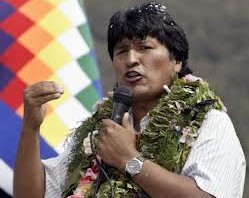
Bolivian president Evo Morales set an important international precedent on Friday January 11, 2013, when his country rejoined the United Nations’ 1961 Single Convention on Narcotic Drugs with reservations, as the U.N. recognized the traditional use of the coca leaf and Bolivians’ right to chew the coca leaf in their territory.

In Guatemala, President Molina is meeting with Amanda Feilding of the Beckley foundation who will present the Beckley’s report “Paths for Reform”, containing “the Beckley Foundation’s suggestions regarding the steps which the Guatemalan government might now take to maintain the momentum of the President’s initiatives. It complements the report Illicit Drug Markets and Dimensions of Violence in Guatemala, which analyses Guatemala’s situation under the current policies.“

President Molina has been pushing since taking office as year ago for alternatives to the current prohibitionist policies. Guatemala, together with its neighbor Honduras and El Salvador have been taken over by Mexican drug cartels and turned into a battleground between the brutal and much feared Zetas and the Sinaloa cartel fighting for the control of key transit routes to the US.

In Mexico, narco-violence keeps spreading even if the body count may have stabilized or even somewhat decreased with a relative normalization of the Ciudad Juarez territory where the Sinaloa cartel seems to have gained the upper hand. Regions that had been relatively spared until now are being affected  and violence is reaching Mexico City where 22 bodies were discovered on January 12-13 and another 16 bodies in nearby Toluca. Newly inaugurated President Enrique Pena Nieto has said that reducing violence in Mexico is one of his government’s top priorities and has set an ambitious agenda that may stay “letra muerta” (dead words) unless he can get the cooperation of state and local authorities. His position on the War on Drugs and drug policy reform is as fuzzy as ever. The debate may be starting though, as the PRD opposition party is presenting a legalization proposal that stands very little chance of approval but will certainly bring up the debate to the governmental level.

In the UK, the All-Party Parliamentary Group for Drug Policy Reform issued a report on January 14, recommending sweeping changes to current drug policies and decriminalization of all drugs with legalization of the least dangerous ones. The report was promptly rejected by Prime Minister David Cameron, claiming that the current approach to drugs in the UK is “the right one and is working”, making one wonder what he has been smoking lately. Meanwhile, his Deputy Prime Minister and partner in the ruling coalition, Nick Clegg, declared that the “drugs war is lost” and “current drugs policy have not been delivering for a while”.

On January 16, The British Medical Association, a professional association and registered trade union for doctors, published a comprehensive report on drug policy in the UK making clear the role they feel medical practitioners should play, not only in improving care of problem drug users, but also in becoming involved in the political debate over drug policy. http://www.beckleyfoundation.org/2013/01/16/doctors-make-themselves-heard-in-the-drug-policy-debate/

In France, 150 to 200 marijuana social clubs (clubs of growers for personal use) decided to come out of the closet in February and apply for official registration. Cannabis social clubs have been legal in Spain for quite some time already.

Jeffrey Dhywood
Investigative writer,
Author of “World War D – The Case against prohibitionism, roadmap to controlled re-legalization”

Download a free 50-page excerpt: http://www.world-war-d.com/.

“World War-D” on Amazon: http://www.amazon.com/dp/0984690409/
Facebook page: http://www.facebook.com/worldward
Follow me on Twitter: @JDhywood
Become a better informed activist and support global drug policy reform!
Order your own copy of “Word War-D”

  • The reference book on the War on Drugs and prohibitionism
  • A guide to psychoactive substances and substance abuse
  • A blueprint for global drug policy reform and controlled legalization

Media inquiries- book reviews – speaking engagements: contact promo@world-war-d.com


What to expect from the 2016 special UN session on global drug policy?

3 years to shift the balance of power from the drug prohibitionist camp to the reformist camp at the UN

On November 27, the UN General Assembly adopted a Mexican proposal to hold an emergency drug policy summit, scheduled for early 2016 after an intensive preparatory process that will begin next year.

The proposal was first introduced to the UN general Assembly by Mexico, Colombia and Guatemala on September 26, joined by Honduras, Costa Rica and Belize on November 12. It was then backed by the majority of Latin American governments, as well as those of Spain and Portugal at the Ibero-American Summit in Cadiz, on November 17.

While all the backers of the proposal share a common concern about the calamitous drug-trafficking situation in the region, they are far from agreeing on a common approach and seem to be all over the spectrum on the issue. Uruguay is on the verge of becoming the first country in the world to legalize marijuana under state control. Guatemalan President Otto Perez Molina has been the most vocal advocate of legalization since taking office in January, while neighboring Honduras led by Porfirio Lobo, is a hard-line prohibitionist, with most other countries spread between these two extremes.

The two key regional players, Colombia and Mexico have voiced rather ambiguous positions. Colombian President Santos has repeatedly expressed his support for legalization, if the rest of the world agrees, a big if indeed, but has refused so far to take the lead of a drug policy reform alliance. He may be getting closer to assuming this role for which he is particularly suited. In his foreword to the report “Governing The Global Drug Wars” published in October by the Transnational Institute, President Santos declared: “The time has come to take a fresh look and we invite world leaders, scientists and experts to start an open, serious and honest debate about this war. The time has come to think outside the box… This is a global problem that demands a global solution, and therefore a new international consensus is needed.”

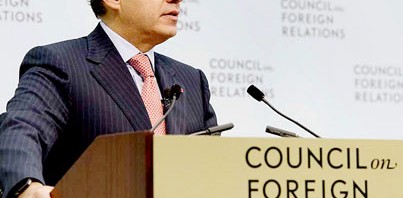
The Mexican position has been even more puzzling since Calderon took office in 2006 and started a brutal confrontation with the Mexican drug cartels that left over 60,000 casualties, 25,000 disappeared and over 200,000 displaced. Internally, Calderon defended fiercely his hardcore War on Drugs policies, while abroad, he has repeatedly admitted that “market-oriented approaches” should be considered. He even declared on September 24, 2012, at the Council on Foreign Relations: “ Let’s be honest, I don’t see any [solution] other than the regulation of drugs in the global marketplace, starting here, in the United States.” (“Seamos honestos: no se me ocurre otra que no sea la regulación de las drogas en el mercado global, empezando por aquí, por Estados Unidos”). It should be noted that the last two former Mexican Presidents, Vicente Fox and Ernesto Zedillo are both active drug policy reformists.

Mexican president Felipe Calderon term ended on December 1st, and the position of his successor Enrique Peña Nieto is still unclear. Peña Nieto was invited at the White House on November 27, and the recent legalization of marijuana in Colorado and Washington was on the agenda, even is nothing transpired. While he reiterated his personal opposition to legalization, in a Time interview published on November 27, Peña Nieto acknowledged that it may be time to reassess the War on Drugs and called for a hemispheric debate on its effectiveness. According to Peña Nieto, state legalization “creates certain distortions and incongruences, since it’s in conflict with the [U.S.] federal government… That will impact how Mexico and other countries in the hemisphere respond.” He even raised the possibility that Mexico itself may legalize marijuana.

On the other side of the Atlantic, Portugal and Spain have some of the most liberal drug policies in the world. Portugal, where all drugs have been decriminalized in since 2000, is held as the poster-boy of drug policy reform, while cannabis clubs are legal in Spain, with the blessing of the Spanish Supreme Court.

So, what does the prospect of a UN summit on drug policy means for the drug policy reform movement, and what can be expected from it? There have been after all quite a few similar events since the Adoption of the 1961 Single Convention on Narcotic Drugs. Will 2016 be the year when reality finally sinks in within the international community that drug prohibition has failed and that it is time to look for more sustainable alternatives? There are good reasons to believe so.

The 1971 Convention on Psychotropic Substances set lofty goals of complete eradication of drug use, toned down to a 50% reduction within 10 years in 1988, a goal reiterated in 1998, but abandoned altogether in 2008 amidst growing restlessness within the UN community. Furthermore, the “soft on drugs” label is rapidly losing its stickiness as the political risk of drug reformist positions is plummeting rapidly. Drug policy reform may even start turning into political asset in some circumscriptions, as was the case in Washington this November, when most of the Democrat political establishment lined up behind the legalization initiative.

As the consensus behind the War on Drugs starts crumbling, and as countries start breaking ranks and rejectthe dominant approach to drug policy altogether, the international community will see reduced opportunities for reprisals and sanctions. Uruguay’s intention to legalize marijuana under state control has been met with rather muted UN opposition so far. Sanctions against Uruguay will be hard to justify if similar sanctions are not imposed on Washington and Colorado, a prospect not even remotely likely, and may just galvanize regional rancor. Other Latin American countries might emulate the Uruguayan model, with neighboring Argentina a real potential candidate.

In the US, the number of medical marijuana states is likely to reach 20 in 2013 as proposals are set to be presented to several state legislatures, including New Hampshire, Illinois and New York. Rhode Island, Maine, Vermont, and Massachusetts, as well as Oregon and Montana may also try to adopt full marijuana legalization through their legislatures, while a legalization initiative is already on the drawing board in California. The battle has even been brought to the US Congress, with a bipartisan bill that would enable the states to make their own marijuana laws. The bill is probably still symbolic at this stage, and stands very little chances, but it may be a harbinger of things to come.

Embroiled in a deep economic and financial crisis, Europe is staying relatively on the sidelines on drug policy issues, even though (or maybe because), European drug policies are generally leaning on the liberal side and drug abuse is substantially lower there than in the US.

Ultimately, the fate of the 2016 special session lies most likely in Washington DC. The US has been the initiator, main architect and chief sponsor of the prohibitionist approach for over a century, and has over the years imposed her prohibitionist policies to the rest of the world. All current international treaties on illicit drugs having been produced and backed by successive US administrations over the past 50 years, a complete U-turn seems unlikely. But with 18 states and the district of Colombia in oblique violation of the international treaties and Colorado and Washington now squarely confronting them, the “tough on drugs” stance is increasingly untenable. Unless it reverses its attitude and draws the lessons from a century of failed prohibitionist rule, the US will be increasingly stuck between a rock and a hard place and her prohibitionist-in-chief posture will become more and more indefensible.

I have argued for quite some time that drug policy reform will be achieved by cracking the US prohibitionist backbone through the combined internal pressure from the states and external pressure from the US allies, principally, in Latin America. In a truly historic year for drug policy reform, the pieces of the global drug policy reform puzzle appeared to be falling into place one by one in 2012, and the US resolve seems to be faltering. The Obama administration appears hesitant after the decisive victories for marijuana legalization in Colorado and Washington. By intensifying the crackdown on medical marijuana over the past few years, Obama brought the War on Drugs to the Caucasian community, which may have further galvanized support for legalization. Whether hidden agenda or law of unintended consequences, it clearly narrowed the administration’s margins of maneuver and crackdowns on the newly legalized marijuana states may backfire even more, further stiffening support for legalization.

While the 2016 special session could easily be derailed, if drug policy reformists, especially in Latin American and within the US, use the next three years to keep resolutely pushing for reform, we may see the emergence of a global coalition and a new global consensus on drug policy. This is an opportunity that reform activists cannot afford to waste.

Jeffrey Dhywood
Investigative writer,
Author of “World War D – The Case against prohibitionism, roadmap to controlled re-legalization”

“World War-D” on Amazon: http://www.amazon.com/dp/0984690409/

www.world-war-d.com
Facebook page: http://www.facebook.com/worldward
Twitter: @JDhywood
jd (at) world-war-d.com

Further readings

http://www.sre.gob.mx/en/index.php?option=com_content&view=article&id=1756:the-un-general-assembly-adopts-mexicos-resolution-on-international-cooperation-against-drugs&catid=27:archives&Itemid=64

http://www.insightcrime.org/news-briefs/un-debate-global-drug-policy

http://www.druglawreform.info/en/un-drug-control/item/3980-governing-the-global-drug-wars

Turning a corner in the War on Drugs

The decisive victories for marijuana legalization in Washington and Colorado on November 6th transform the global drug policy debate

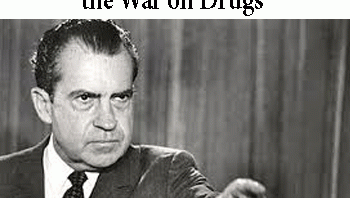
After declaring in 1971 “We must wage total war against public enemy number one in the United State, the problem of dangerous drugs”, President Richard Nixon prematurely claimed victory On September 11, 1973, “We turned the corner on drug addiction in the United states. Drug addiction is under control.” Almost 40 years later, we might indeed be turning a corner in the war on drugs, though not quite the corner envisioned by Nixon, as 2012 is poised to enter the history books as a turning point in the failed war on drugs, and will hopefully signal the beginning of its unfolding.

Discontent about the failed war on drugs policies has been brewing for quite a while, especially in Latin America, but outside of that region, the debate rarely reached much beyond academic and activist circles. Things changed in June 2011 when drug policy reform grabbed the headlines across the world for the very first time with the publication of the Global Commission on Drug Policy Report. The report was signed by an impressive slate of prestigious individuals including seven former heads of state and the former UN Secretary General Kofi Annan, and was a seminal event for drug policy reform. Another important event, The Merida Declaration on December 6, 2011, went virtually unnoticed by the media and drug policy experts alike. Issued at the Tuxtla Dialogue and Agreement Mechanism in Yucatan, Mexico, the declaration was signed by eleven heads of state and high-level representatives of Central America and the Caribbean, including Mexico, Colombia and Chile, and asked “consuming countries … to explore possible alternatives …, including regulatory or market oriented options.”

2012 started with a bang when retired right-wing general Otto Perez Molina, newly elected president of impoverished Guatemala, rattled the world and instantly placed his country on the map by declaring the war on drugs a failure and forcefully advocating legalization. Recently emerged from a decades-long brutal civil war, Guatemala is one of the world’s worst-hit countries by narco-violence, together with its unfortunate neighbors, Honduras and Salvador.

Perez Molina has been unwavering ever since. He brought the drug legalization debate to the April Summit of the Americas, a gathering of all heads of state across the continent, from Canada to Tierra del Fuego, except Cuba (banned by the US). More recently, he brought the debate to the UN general Assembly and was joined by Mexico and Colombia, the two major US allies in the War on Drugs, for a call to revise the international treaties on illicit drugs.

As Perez Molina is actively trying to build a coalition for drug policy reform, he met in early November with newly re-elected Hugo Chavez with legalization on the agenda. Venezuela is a major entry-point on the transit route of cocaine to the US through its extremely porous frontier with Colombia, and has often been a safe haven for Colombian narco-traffickers. However, the relationship between the Chavez regime and his cumbersome guests seems to be turning sour as violence has escalated dramatically in the country. Leftish Chavez joining right-wing Perez Molina in a coalition for drug policy reform might mollify the other members of the leftish Latin American coalition that includes Peru, Ecuador and Bolivia. Left-leaning Argentina president Kirchner might join as well. Uruguay announced in June its intention to legalize marijuana under state control and the proposal is currently churning through the legislative process, with vote expected before Christmas.

The US being by far, the largest market for illegal drugs in the world, the decisive victories of the marijuana legalization initiatives in Colorado and Washington take special significance in such a context. It is noteworthy that the US Justice Department refrained from taking a position on these initiatives during the campaign despite being urged by legalization opponents.

November 6 was a watershed moment for marijuana legalization and drug policy reform. Both initiatives enjoyed wide support across the political spectrum ranging from the state democratic party to the GOP US Senate Candidate for Washington, Michael Baumgartner, or former GOP Congressman Tom Tancredo in Colorado. Sponsored by former US attorney John McKay and current City Attorney Peter Holmes, and with backing from the mayor and the entire city council of Seattle as well as the Seattle Times, the Washington initiative lined up the most impressive slate of main-stream backing and enjoyed double digits victory. Curiously, in Washington and Colorado, the staunchest opposition came from the medical marijuana communities. The Oregon initiative, placing no restrictions on cultivation for personal use, was generally considered too radical and was soundly defeated. The Massachusetts medical marijuana initiative provided the icing on the cake with a landslide victory and was another clear indication of the growing disconnect between politicians and the public on drug policy issues.

The marijuana legalization victories in the US will have momentous implications for Latin America and places the federal government in an awkward position, caught between internal and external pressure for reform. It certainly weakens its hands in its negotiations with its increasingly restive allies in the war on drugs. It might also give the needed impetus for the crystallization of a coalition of the willing and rally the support of the countries such as Costa Rica that have prudently stayed on the sideline until now.

The 22nd Ibero-American Summit, held on November 16 – 17 2012 in Cadiz, hosted by Spain and attended by Portugal and most Latin American countries provided a good test of the effects of marijuana legalization victories. Portugal and Spain have some of the most liberal drug policies in the world. Despite the economic crisis that has been shaking Southern Europe for the past few years, the summit offered a favorable environment for an open debate on drug policy reform and the final declaration called for an urgent UN debate on drug policy and an analysis of the potential consequences of legalization.

Colombian President is increasingly insistent in his call for global debate but remains reluctant to take a leading position. Meanwhile, the 5-months long relative power vacuum in Mexico will finally be filled when President-elect Enrique Peña Nieto takes office on December 1st. Peña Nieto will travel to Washington on December 4th and the recent legalization of marijuana in Colorado and Washington will be high on the agenda. While he reiterated his personal opposition to legalization, in a Time interview published on November 27, Peña Nieto acknowledged that it may be time to reassess the War on Drugs and called for a hemispheric debate on its effectiveness and even raised the possibility that Mexico itself may legalize marijuana. Colombia has long sought the support of Mexico in its pressure for drug policy reform, a support that Calderon could never offer openly. Peña Nieto’s positions have been ambiguous so far, but he might not have alternatives if he cannot contain the violence in Mexico, a prospect that seems highly unlikely. There is always, of course, the possibility that the PRI will broker a pax-narca, but the fragmentation of the cartels and the emergence of the brutal Zetas may very preclude this possibility.

In the US, the reaction of the federal government has been muted so far, cantoned to a reiteration of the supremacy of federal laws. The president’s options might be limited, especially as the solid victory in both Washington and Colorado and a landslide medical marijuana victory in Massachusetts diametrically reverse the political risk of marijuana legalization, with opposition to the issue becoming increasingly politically risky with youths and minorities, two key constituencies in the rapidly evolving electoral landscape.

Several states, including Illinois and New York are expected to push medical marijuana through their legislatures while New England states intend to move to the next step to legalize recreational marijuana. This would of course further weaken the Federal government hand in its negotiations with the states as well as with its Latin American allies. There is no doubt that the November victories will embolden the states to resist federal interference with their marijuana policies, and will dampen Latin American appetite for the hardcore prohibitionist policies of the past. A corner has most likely been turned in the War on Drugs on November 6, 2012, a corner towards legalization.

Jeffrey Dhywood
Investigative writer,
Author of “World War D – The Case against prohibitionism, roadmap to controlled re-legalization”

“World War-D” on Amazon: http://www.amazon.com/dp/0984690409/

www.world-war-d.com
Facebook page: http://www.facebook.com/worldward
Twitter: @JDhywood
jd (at) world-war-d.com

Making sense of the fast-evolving drug policy debate

2012 has been quite an amazing year for drug policy reform and events are accelerating at breakneck pace after the historic marijuana legalization victories in Colorado and Washington. The domino effect is about to get started in the US, in Latin America and the rest of the world. A major global initiative will be launched on December 5, with the support of presidents Santos of Colombia and Perez Molina of Guatemala, as well as a dozen of ex-heads of states including Bill Clinton and Jimmy Carter.
If you want to make sense of the rapidly evolving global drug policy debate, “World War-D” gives you a global understanding of all the facets of the issue, bringing common sense and sanity to an issue often shrouded in misconceptions, preconceptions and taboos. More importantly, “World War-D” gives you in-depth analysis of practical, pragmatic and realistic alternatives to prohibition, alternatives that can eliminates the harm related to drug trafficking while managing and minimizing the harm related to drug abuse. As prohibitionism is starting to crumble at the edges, no other book offers such depth and breadth of understanding.
Become a better informed activist and support global drug policy reform!
Order your own copy of “Word War-D”

  • The reference book on the War on Drugs and prohibitionism
  • A guide to psychoactive substances and substance abuse
  • A blueprint for global drug policy reform and controlled legalization

Order “World War-D” on Amazon: http://www.amazon.com/dp/0984690409/

With the holiday season fast approaching, you can give a gift of common sense and sanity to your loved ones, your friends and your relatives. Tired of useless, senseless stockings stuffers? With our holiday discount, “World War-D” is now even affordable enough to be given away as meaningful stuffers this holiday season!
Order your own copy of “World War-D” at our already discounted price of $9.99 for the ebook version (epub, kindle or PDF) or $14.99 for the print version (448 pages, 6×9 paperback), and get your 2nd copy for 50% off the cover price, or $5.99 for the ebook and $9.99 for the paperback version. Order 3 books or more, and get a 50% discount off your entire order.

Stay tuned and keep up the fight! Thank you for your continued support.

Jeffrey Dhywood
Investigative writer,
Author of “World War D – The Case against prohibitionism, roadmap to controlled re-legalization”
Download a free 50-page excerpt: http://www.world-war-d.com/.
“World War-D” on Amazon: http://www.amazon.com/dp/0984690409/
Facebook page: http://www.facebook.com/worldward
Follow me on Twitter: @JDhywood
My readers routinely comment that “World War-D” should be required reading for politicians and lawmakers and strongly recommend it to those who want to understand all the facets of the issue and grasp its global complexity. No matter where you stand on drug prohibition, you will get a much clearer understanding of the issue in all of its multi-faceted complexity and with a global perspective. See readers’ reviews: http://www.world-war-d.com/reviews/readers-reviews

Obama’s drug policy quandary is about to deepen further

How much longer can Obama postpone the unavoidable drug policy debate?

Something was set in motion on November 6, 2012, that could become irreversible with sufficient mobilization and could finally put an end to a century of prohibitionist policies. Reality seems to be dawning at long last that the war on drugs is a colossal, costly and destructive failure. A survey by the (ONG) “Asuntos del Sur” published on November 26 indicates support for the legalization of marijuana reaching 81% in Buenos Aires, 79% in Santiago de Chile and 73% in Mexico City among the 18 to 34 years old population.

As Uruguay moves resolutely towards the legalization of marijuana under state control, Argentina could be next in line. The Argentine Supreme Court already ruled the decriminalization of possession for personal use of all drugs. The leader of the center-left coalition Broad Progressive Front (Frente Amplio Progresista or FAP) Hermes Juan Binner, recently declared his support for the legalization of all drugs.

In Chile, Senator Ricardo Lagos Weber, son of ex-president Ricardo Lagos (2000-2006) presented a project of legalization of cultivation for therapeutic use and decriminalization of possession of small amounts. Ex-president Ricardo Lagos is a member of the Global Commission on Drug Policy.

Meanwhile, the 5-months long relative power vacuum in Mexico will finally be filled when President-elect Enrique Peña Nieto takes office on December 1st. Peña Nieto will travel to Washington on December 4th and the recent legalization of marijuana in Colorado and Washington will be high on the agenda. While he reiterated his personal opposition to legalization, in a Time interview published on November 27, Peña Nieto acknowledged that it may be time to reassess the War on Drugs and called for a hemispheric debate on its effectiveness. According to Peña Nieto, state legalization “creates certain distortions and incongruences, since it’s in conflict with the [U.S.] federal government… That will impact how Mexico and other countries in the hemisphere respond.” He even raised the possibility that Mexico itself may legalize marijuana.

While in Washington, Peña Nieto will also meet VP Joe Biden, so far a staunch and vocal opponent of legalization. Will Biden have his legal marijuana epiphany, just like he had his gay marriage epiphany few months ago? Finally, Peña Nieto will meet Secretary of State Hilary Clinton, whose husband famously didn’t inhale but just came out of the closet with Richard Branson and Morgan Freeman for the launch of the documentary “Breaking the Taboo”.

Other Latin American leaders, chief among them Colombia President Juan-Manuel Santos, call for an urgent debate on global drug policies.

In the US, the governor of New Hampshire, the last New England state without medical marijuana regulation, signaled his support while activists are pushing medical marijuana through the New York legislature. Meanwhile, other New England states are considering moving one step further and are preparing legislation to legalize marijuana for recreational use. Rhode Island and Maine made an announcement to that effect on November 15, and Vermont and Massachusetts are expected to follow soon, which would further alarm US’ Latin Americans allies.

After Obama’s solid reelection victory largely attributed to the 71% support of Latin voters, the clout of the US Latin community has been raised quite a few notches and Obama knows that he needs to tread lightly. Latinos are emerging as a critical political force in the US. Together with the African Americans, they have paid the highest price within the US for the war on drugs. Their grievances cannot be ignored much longer.

In such a context, Obama’s drug-policy quandary will only deepen until he recognizes the inevitability of an honest and open drug policy debate, putting science and sound policy-making over politicking and ideology, a debate that takes into account public opinion and the realities of the 21st century and acknowledges the costly failure of prohibition.

The almost month-long silence of the Obama administration will need to be broken sooner or later. The political cost of picking up a long-lost rear-guard battle might be more than Obama is willing to stomach; it would certainly demobilize a critical part of his electoral base and may prove costly in the 2014 election cycle.  Even worse, it would accomplish very little and would most likely merely postpone the unavoidable. The times are changing, and they are changing at accelerating pace. With support for drug policy reform at all-time high in the youth population, support keeps growing is the general population as well with the generational change. The acceptability and normativity of marijuana use is also growing steadily as the ubiquitous green leaf invades screens big and small.

Prohibition has long been counterproductive, its message increasingly ignored or derided, and so are critical health warnings, severely minimizing the perceived danger of drug use. Credible studies on the long-term effects of substance use and abuse are sorely missing. Legalization with proper control and adequate flexibility would bring back science and much needed common sense and sanity where posturing, moralizing and politicking have long reigned unchallenged.

It is time to have an open, adult discussion about drug use in general. Both opponents and proponents of legalization have a tendency to caricature and hyperbole. All psychoactive substances, irrespective of their legal status, have recreational and medical uses as well as potentially harmful side-effects, and this includes marijuana, just as much as alcohol, tobacco, psycho-pharmaceuticals or cocaine and heroin. Marijuana is not harmless, as many activists would like us to believe, but it is far from the scourge prohibitionists claim it to be. The currently illicit drugs should be legalized and properly regulated BECAUSE of their harm potential and BECAUSE prohibition results in a total loss of control.


Jeffrey Dhywood
Investigative writer,
Author of “World War D – The Case against prohibitionism, roadmap to controlled re-legalization”

“World War-D” on Amazon: http://www.amazon.com/dp/0984690409/

Facebook page: http://www.facebook.com/worldward
Twitter: @JDhywood
jd (at) world-war-d.com


Obama’s quandary

After two decisive victories for marijuana legalization in Colorado and Washington State, what to expect from Obama?

With the historic and decisive victories for marijuana legalization in Colorado and Washington State, the War on Drugs has been dealt a severe blow this November 6th, and the global drug policy debate has entered a whole new phase. Marijuana is still illegal for the federal government, which overrules states’ rights, and this is probably just the beginning of the battle. The U.S. Department of Justice reacted by saying that its enforcement policies remain unchanged, adding: “We are reviewing the ballot initiative and have no additional comment at this time.”

Medical marijuana also won in a landslide in Massachusetts, bringing to 18 the number of states (plus the district of Colombia) where marijuana is legal for medical purpose, further complicating the task of the Federal Government. A medical marijuana initiative in Arkansas, the first of its kind in the deep-South and the Bible belt, fared much better than expected, ending up narrowly defeated at 49 to 51 when most polls were predicting double-digits loss. This could be indicative of evolving attitudes even in the most conservative parts of the US.

It is quite clear that the status of marijuana poses a real dilemma for Obama and the Democratic Party. Marijuana legalization has wide support among young voters and drug prohibition disproportionally affects minorities, filling jails to the beams. Both constituencies have been keys to Obama’s 2008 and 2012 victories. Marijuana activists were frazzled by the Obama crackdown on medical marijuana dispensaries but at the end of the day they lined up behind him thanks to their deep distrust of Mitt Romney, while they are still hoping that Obama will have a change of heart in his second term.

So, with reelection out of the way, how will the Obama administration react? Marijuana legalization has lost its hot-potato status as the Washington initiative enjoyed mainstream support across the political spectrum. The public is clearly ahead of its politicians on that matter and support for marijuana legalization has been steadily growing nationwide over the past 30 years, a trend unlikely to reverse anytime soon with the aging of its opponent and coming of age of its proponents.

Under such circumstances, Obama would have far more to lose than to win in picking up a battle with Colorado and Washington State; the issue could prove distracting and definitively alienate and demobilize some of his strongest supporters, which could prove costly in the mid-term 2014 election where voters turn-out is traditionally low.

While marijuana legalization could be stuck for years in lengthy legal battles, this would keep the issue in the political debate and the headlines. In a country weary of undue government interference, it will be hard to justify fighting the will of the people, especially when it has been expressed as decisively as it was on November 6th. Furthermore, prohibitionism might be deeply entrenched, but it has never withstood close scrutiny, as witnessed by countless studies and reports, including the 1972 Shafer Commission’s Report sponsored by the Nixon administration itself and later repudiated for recommending marijuana decriminalization. Drug policy reform would most likely benefit from keeping marijuana legalization in the limelight, as exposure allows it to generally outshine its prohibitionist nemesis.

Moreover, few more states legislatures are expected to take on medical marijuana in 2013, bringing the medical marijuana camp tantalizingly closer to the 25 count when a majority of the states will have legal access to medical marijuana. California is widely expected to present a legalization initiative in 2014 and may be joined by Massachusetts.

Last but not least, most law-enforcement is done by state and local agencies in the US and the federal government would be powerless without their cooperation, which strongly limit its practical options.

Should the Obama administration decide to fight marijuana legalization heads-on, it will clearly go against the tide and could face an uphill battle.

Pressure for drug policy reform is not just internal. Colombia and Mexico, the US’ closest Latin American allies have expressed for a while their growing frustration with the current prohibitionist policies. Now Guatemala, long a pariah state emerging from a decades-long civil war plagued with human-rights abuses, is trying to garner support throughout the region for a radical reevaluation of drug policy and a debate about legalization and proper control of all drugs.

There is also risk (or hope depending on where people stand on the issue) of a domino effect. The US elections have been watched closely by the activist community all over the world, from neighboring Canada to Australia and New Zealand, and through Latin America and Europe. The Colorado and Washington victories may have opened the Pandora box, and many states, provinces and countries could follow.

On the other hand, the US has been the world’s prohibitionist-in-chief for over a century, and has over the years imposed her prohibitionist policies to the rest of the world. All current international treaties on illicit drugs having been produced and backed by successive US administrations over the past 50 years, a complete U-turn seems unlikely. But with 18 states and the district of Colombia in oblique violation of the international treaties and Colorado and Washington now squarely confronting them, the “tough on drugs” stance is increasingly untenable. Unless it reverses its attitude and draws the lessons from a century of failed prohibitionist rule, the US will be increasingly stuck between a rock and a hard place and her prohibitionist-in-chief posture will become more and more indefensible.

2012 has certainly been a momentous year for drug policy reform, with a bumper crop of firsts:

  • Otto Perez Molina, from Guatemala, was the first president to formally and forcefully call for legalization and proper control of all drugs last January.
  • Drug legalization was placed on the agenda on the Summit of the Americas in April 2012
  • Uruguay announced its intention to legalize marijuana under state control in June 2012
  • Colombia, Guatemala and Mexico formally requested an open debate about drug policy reform at the 2012 UN General Assembly.
  • And of course, the states of Colorado and Washington voted decisively to legalize marijuana on November 6, 2012

In another notable development, US’ closest ally, Israel, is expanding its medical marijuana program, fueled by its strong research sector in medicine and technology with active governmental support.

Will 2012 be the year when the US acknowledges at long last the failure of her prohibitionist policies and start exploring less destructive, more realistic and pragmatic alternatives? Substance abuse is here to stay and tackling it is a matter of being smarter rather than tougher. Public mobilization behind the issue will be critical. Petitions and other forms of public pressure are likely to emerge both in support and against marijuana legalization and drug policy reform in general.

It should be noted that beyond the fate of particular initiatives or policies, powerful global trends are at play here. While alcohol has been the dominant psychoactive substance and social lubricant of Western civilization since its inception over 8,000 years ago, and while Western civilization has dominated the world for the past few centuries, globalization is rapidly shifting the geopolitical tectonic plates. As the world accelerates its move towards multipolarity, where no single power exerts overwhelming dominance, alcohol is also losing its psychoactive dominance to become just one of many psychoactive modalities, being replaced firstly by psychopharmaceuticals, followed by marijuana, more properly called cannabis.

At the end of the day, the days of prohibition are most likely counted and it will fade away with the American century that started with the 1908 Shanghai conference, the event that set the foundations of global prohibition, on the eve of World War-I.

Jeffrey Dhywood
Investigative writer,
Author of “World War D – The Case against prohibitionism, roadmap to controlled re-legalization”

“World War-D” on Amazon: http://www.amazon.com/dp/0984690409/

www.world-war-d.com
Facebook page: http://www.facebook.com/worldward
Twitter: @JDhywood
jd (at) world-war-d.com

Making sense of the global drug policy debate

2012 has been quite an amazing year for drug policy reform and events are accelerating at breakneck pace after the historic marijuana legalization victories in Colorado and Washington. State lawmakers across New England are preparing legislation to legalize marijuana for recreational use. Rhode Island and Maine announced on November 15th their intentions to introduce marijuana legalization bills to their legislatures next year. Vermont and Massachusetts are expected to follow soon. Meanwhile, public opinion is shifting rapidly. According to a Rasmussen poll released Tuesday, a stunning 82% of the US population now believes that the War on Drugs is failing.

On the international scene, Latin American countries are clamoring for a UN debate about legalization and Colombian President Santos is asking Mexican President Pena Nieto to lead the region out of the devastating War on Drugs as soon as he takes office on December 1st. In another historic move, the ruling party in Uruguay presented on November 15th, the project of law for the legalization of marijuana. Vote is scheduled for early December. If it passes, Uruguay would become the first country in the world to legalize marijuana.

“World War-D” has become the reference book to make sense of the rapidly evolving global drug policy debate, bringing common sense and sanity to an issue often shrouded in misconceptions, preconceptions and taboos. My readers routinely comment that it should be required reading for politicians and lawmakers and strongly recommend it to those who want to understand all the facets of the issue and grasp its global complexity. No matter where you stand on drug prohibition, you will get a much clearer understanding of the issue in all of its multi-faceted complexity and with a global perspective. As prohibitionism is starting to crumble at the edges, no other book offers such depth and breadth of understanding.

With the holiday season fast approaching, we invite you to give the gift of common sense and sanity to your loved ones, your friends and your relatives. Tired of useless, senseless stockings stuffers? With our holiday discount, “World War-D” is now even affordable enough to be given away as meaningful stuffers this holiday season!

Order your own copy of “World War-D” at our already discounted price of

$9.99 for the ebook version (epub, kindle or PDF)

or $14.99 for the print version (448 pages, 6×9 paperback)

and get your 2nd copy for 50% off the cover price, or

$5.99 for the ebook and

$9.99 for the paperback version.

Order 3 books or more, and get a 50% discount off your entire order

Save on shipping and handling too.

How it works:

Order the paperback version and the discount will be applied automatically. In addition, you will receive a link to our special holiday page where you will be able to order extra copies of “World War-D” at the 50% holiday discount until December 31, 2012.

Order the ebook version and you will receive the link to our special holiday page where you will be able to order extra copies of “World War-D” in either ebook or paperback at the 50% holiday discount until December 31, 2012.

Please keep the link to our special holiday page for orders

up to December 31, 2012.

If you already ordered from us through our website, you should have received you are already eligible for the 50% holiday discount and you should have received a message with the link to our special holiday page. If you ordered from Amazon or any other source, please send a copy of your sales invoice to receive the link to our special holiday page. Contact us if you purchased from a lecture, show or any other way.

To guarantee delivery before Christmas

order before December 15th for US shipping,

or December 10th for international shipping.

Offer expires December 31st, 2012.