Calderon: U.N. must lead a debate on drug policy

Mexican President Felipe Calderon ask for drug policy debate at the UNMexico ask for drug policy reform at the UN

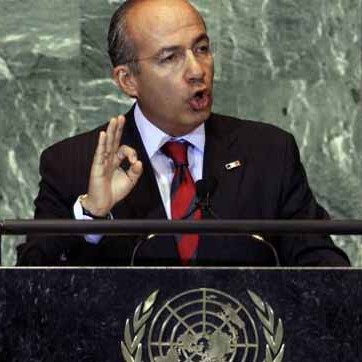
Breaking news:In his last discourse at the UN, President Felipe Calderon of Mexico formally ask the UN to open a debate about drug policy: “Today, I am proposing formally that (the United Nations) … carry out a far-reaching assessment of the progress and the limits of the current prohibitionist approach to drugs,”
http://uk.reuters.com/article/2012/09/26/uk-un-assembly-mexico-drugs-idUKBRE88P1II20120926

Listen to the entire speech: http://www.youtube.com/watch?v=MX7sEmo2MLw

UN transcripts: http://gadebate.un.org/sites/default/files/gastatements/67/MX_es.pdf

http://www.puntorevista.com/secciones/mundial/inter2609calderon_onu_crisis_global.html


Three illegal drug users in a row to the US presidency

The accession of not one but three illegal drug users in a row to the US presidency constitutes an existential challenge to the prohibitionist regime. The fact that some of the most successful people of our time, be it in business, finances, politics, entertainment or the arts, are current or former substance users is a fundamental refutation of its premises and a stinging rebuttal of its rationale.

Instructions on how to reach directly the Latin american presidents

The best way to increase your impact is to contact directly the key players in the drug legalization debate: the presidents of Colombia and Mexico, of course, but also of the Central American countries: Guatemala, Costa Rica, Honduras, El Salvador, Nicaragua, Panama.

Tweet or post on Santos and Calderon’s walls the link to the open letter to Presidents Calderon of Mexico and Santos of Colombia: http://www.calderon-santos.org/carta-abierta/ with a short commentary. Please be courteous and respectful.
President Calderon: On Twitter: @FelipeCalderon, On Facebook: http://www.facebook.com/home.php#!/presidentefelipecalderonhinojosa, By email: felipe.calderon@presidencia.gob.mx
President Santos: on Twiter: @JuanManSantos, on Facebook: http://www.facebook.com/JMSantos.Presidente?sk=wall

Guatemala:  Otto Perez Molina, president, chief promoter of the legalization debate: @ottoperezmolina

Roxana Baldetti, cice president: @roxanabaldetti, despacho@vicepresidencia.gob.gt

I invite you to read the remarkable article by Perez Molina published on April 7 in the UK-based Observer: http://www.guardian.co.uk/commentisfree/2012/apr/07/latin-america-drugs-nightmare

Costa Rica Laura Chinchilla, president, support the Perez Molina initiative: @Laura_Ch

Honduras: Porfirio Lobo, President, opposes legalization, open to discussion: @PEPE_LOBO diseloalpresidente@presidencia.gob.hn

El Salvador: Mauricio Funes, president, opposes legalization, open to discussion: @MauricioFunesSV, http://www.mauriciofunestv.com/escribenos.php

Nicaragua: Daniel Ortega, president, opposes legalization: http://www.presidencia.gob.ni/

Panama: Ricardo Martinelli, president, opposes legalization, open to discussion:  @rmartinelli

Modes of administration – evolutionary adaptive gaps

Modes of administration – evolutionary adaptive gaps

Humans are (so far) the most evolved species within the ecosystem of planet Earth, and the end result of a long evolutionary process going back to the primordial soup, out of which, as the dominant theory goes, all forms of life differentiated and evolved. It is increasingly apparent that the competition-driven Darwinian model is incomplete and that evolution is driven just as much by cooperative interaction as by competition, the yin and yang of evolution. Cooperation as a major force of evolution may have escaped evolutionists because of its ubiquity: for billions of years, life on our planet consisted of unicellular organisms that eventually congregated to form unicellular systems and then multicellular organisms. Interactive cooperation allowed the division of labor and the creation of specialized cells that eventually congregated in organs, allowing further specialization and differentiation, thus speeding up the evolutionary process. Just imagine survival of the fittest ruling the cells of your brain or your liver! Likewise, the major driving force of social systems, whether in the animal or human kingdom, is not competition, but interactive cooperation.

All life forms co-evolved interdependently in competitive symbiosis in which the vegetal kingdom plays a critical and distinctive role in the evolution of the animal kingdom. The vegetal kingdom provides directly or indirectly to the animal kingdom not only its food, but also its medicine, as well as substances that affect its mind, and may have been key to some critical evolutionary steps. This is indeed one of the great wonders and mysteries of life, and a powerful testimony to the prevalence of cooperation in the evolutionary process. The affinity between plants like poppy and cannabis and some of the most fundamental systems of brain activity, the dopaminergic and the cannabinoid system, both found in even the most primitive animal species, is nothing short of remarkable. Likewise, alcohol, as we will see in the chapter dedicated to that substance, is not only present in interstellar space, it was most likely one of the ingredients of the primordial soup theorized to be at the origin of life.

Humans co-evolved with psychoactive substances of natural origin in symbiosis with the vegetal kingdom. However, concentrates and extracts, such as distilled alcohol, heroin, cocaine, or amphetamines, or purely synthetic drugs, as well as direct routes of administration such as injection or inhalation, are novel features of our environment. As such, they create an evolutionary adaptive gap and are inherently pathogenic, although their use may be safe and warranted in some circumstances.[1]

Psychoactive substances can cross the blood-brain barriers and can be absorbed via various pathways. The digestive system, via the oral route, is the overly prevalent channel of administration of food and other substances in the animal kingdom, and is set up to withstand a wide variety of ingests. Furthermore, substances absorbed through the digestive system take a relatively long time to reach the brain as they are partly metabolized within the digestive system and the liver before they can reach the brain, which they do gradually. Therefore, ingestion is always the least dangerous and least addictive form of administration for a given substance.[2] The digestive administration process can be modulated to a certain extent. Thus, substances taken on an empty stomach reach the brain much faster than when they are taken with a meal.

The lungs, on the other hand, were designed to absorb air, and not much else. Even the smell of roses and other olfactory environmental signals are meant for the olfactory system located within the nose cavity, and not for the lungs. The lungs having a fractal structure, their total surface area is about the size of a tennis court, allowing fast and efficient oxygenation of the blood. Absorption through the lungs is extremely fast and powerful. Substances than can be absorbed through the lung tissue promptly reach the brain. Smoked heroin, cocaine or methamphetamine reach the brain within seconds of inhalation and peak within minutes. However, as we will see in a further chapter, cannabinoids and THC are different as they are strongly lipophilic. Their access to the brain is delayed upon inhalation, and the maximum “high” of cannabis is reached within 15 to 30 minutes.

As for veins, they were never designed to be punctured. Thus, it shouldn’t come as a surprise that intravenous injection is the fastest, most powerful and most damaging form of administration. Nasal absorption is notably slower than inhalation but still quite powerful and fast acting. Still, the nasal tissue is not meant to absorb anything more than infinitesimal doses of subtle and not so subtle aromatic substances ranging from utterly repulsive to sublime, from skunks to roses. Sublingual absorption is another fast track to the brain that is about on a par with nasal absorption. Chewing, such as chewing coca leaves or tobacco, involves a substantial amount of absorption through sublingual and other buccal mucosae.

Recreational drug users are motivated by the hedonistic reward provided by the substance. For most psychoactives except psychedelics, the intensity of the hedonistic reward depends in large part on the acuity of the peak intensity and the speed to reach this peak. A gradual rise of psychoactive concentration in the brain allows it to somewhat adapt to the substance and to modulate its effects to a certain extent, smoothing out its most damaging effects. A steep peak, on the other hand, doesn’t allow any adaptation; the more intense the peak, the more acute its effect. The most acute peaks create a surge of pleasurable sensation, the “rush” described by many injecting addicts, that they crave intensely. The steeper the peak, the more intense the rush, the more acute and disruptive will be the effects on the brain, causing a homeostatic imbalance which results in chronic dysregulation of the brain reward mechanisms and the brain’s neurotransmission in general.

Routes of administration that result in the rapid entry of a substance into the brain and/or faster rates of delivery have a greater effect on the neurotransmission systems in the brain, especially the reward systems, producing sensitization. Hard liquors are more damaging than beer or wine, especially on an empty stomach. Smoked opium reaches the brain faster and is more addictive than ingested opium. Injection and inhalation of active ingredients such as amphetamine, heroin or cocaine have the quickest entry and fastest rates of delivery. Therefore, they represent the most drastic evolutionary gap and have the most damaging effects.

Set and setting, expectation and intentionality affect the neuronal epigenetic environment. As such, they may influence the effects of particular substances. Thus, ritualistic use of tobacco where the plant is used with veneration and respect is vastly different from chain smoking of industrial cigarettes. Likewise, chronic pain sufferers under long-term opiate medication can usually discontinue without much problem once their medication is not needed anymore.[3] The absence of secondary reinforcers in the case of pain medication probably plays a critical role in preventing addiction. Nowhere is the set and setting more important than in the use of psychedelics.


[1] Randolph M. Nesse* and Kent C. Berridge, “Psychoactive Drug Use in Evolutionary Perspective,” Science 278, 63, 1997.

[2] Cannabis is somewhat an exception as ingested cannabis has stronger psychoactive effects than smoked cannabis (see Chapter 10).
Endocannabinoid news

The endocannabinoid system of the skin in health and disease: novel perspectives and therapeutic opportunities

http://www.ncbi.nlm.nih.gov/pmc/articles/PMC2757311/?tool=pubmed

An interesting research paper from the NIH on the newly discovered cutaneous endocannabinoid system. The therapeutic potential of cannabinoids to control cell proliferation should warrant further studies. Too bad our lawmakers most likely never bother to read such studies. It probably flies well over their heads.

Here is the conclusion of the paper: “Collectively, it seems that the main physiological function of the cutaneous ECS is to constitutively control the proper and well-balanced proliferation, differentiation and survival, as well as immune competence and/or tolerance, of skin cells. Pathological alterations in the activity of the fine-tuned cutaneous ECS might promote or lead to the development of certain skin diseases. Therefore, it is envisaged (this is also strongly supported by pilot studies) that the targeted manipulation of the ECS (aiming to normalize the unwanted skin cell growth, sebum production and skin inflammation) might be beneficial in a multitude of human skin diseases. However, to predict the real therapeutic potential and translate the exciting preclinical observations discussed earlier into clinical practice, numerous important questions should carefully be addressed (Box 2). Nevertheless, targeting the cutaneous ECS for therapeutic gain remains an intriguing and provocative possibility warranting future studies.”

Further recommended readings:

“The Endocannabinoid System as an Emerging Target of Pharmacotherapy” http://pharmrev.aspetjournals.org/content/58/3/389.short

“Endocannabinoids Modulate Human Epidermal Keratinocyte Proliferation and Survival via the Sequential Engagement of Cannabinoid Receptor-1 and Transient Receptor Potential Vanilloid-1” http://www.nature.com/jid/journal/v131/n5/full/jid2010421a.html

Rant of the day

I personally don’t care one way or another about pot. That’s not my point anyway with “World War-D”. My point is that people will use drugs, whether we like it or not, so leaving organized crime to manage drugs is pretty stupid. Of course, organized governments often behave like organized crime, but that’s another story.

I also think that the medical MJ crap is mostly a scheme. Yes, it benefit a handful of people, but let’s face it, most people using medical MJ do so to get high. I actually don’t see what is wrong with that anyway. Alcohol has some medicinal value, but the vast majority of people drink alcohol for the buzz, whether it is to relax and feel good, or to get totally zonked out.

Not to mention that it seems totally silly to ban an entire industry, from ropes to clothes to shampoo and body lotion, not to mention food and construction materials, just to prevent (without any success whatsoever) pot heads from getting high.

Bottom line on medical MJ

Bottom line on medical marijuana: prohibition is the worst possible form of control and create immense collateral damage. Medical marijuana has been a welcome relief — and a diversion, whose limits are sticking out more and more everyday. It also created a grey marketplace were some flourished.

All psychoactive substances, whether legal (alcohol, caffeine, tobacco, etc), prescription or illegal work the same way. Our neurons don’t read labels and couldn’t care less about legal status. Patterns of use are similar for all psychoactive substances: a small percentage will abuse while the vast majority use responsibly, and regular moderate use is often good for health (true for caffeine, alcohol, coca leaf, some prescription drugs, and probably MJ or opium). Moderate use of opium was the general rule for thousands of years as opium was one of the basis of medicine (and still is, ironically – opiates still are the best pain-management tools around).

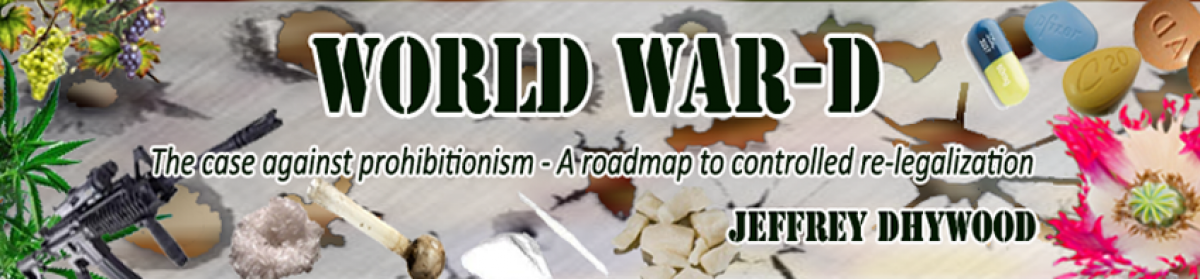
The war on drugs is also a cultural war, touting alcohol, the dominant psychoactive  substance of Western civilization, against the dominant psychoactive substances of Andean or Eastern civilization: coca leaf, cannabis and opium; meanwhile, the western-dominated pharmaceutical industry is flooding the planet with a new generation of psychoactive substances in its (so far very successful) attempt at medicalization of normalcy. This, by the way, is one of the dominant theme of my just released ” World War-D: the case against prohibitionism. A roadmap to controlled re-legalization.”

The only viable long-term solution to the drug issue: global re-legalization under a multi-tiers “legalize, tax, control, prevent, treat and educate” regime with practical and efficient mechanisms to manage and minimize societal costs.

Far from giving up and far from an endorsement, controlled legalization would be finally growing up; being realistic instead of being in denial; being in control instead of leaving control to the underworld. It would abolish the current regime of socialization of costs and privatization of profits to criminal enterprises, depriving them of their main source of income and making our world a safer place.

D.E.A. Launders Mexican Profits of Drug Cartels

Fast and Furious revisited – during the laundry, the killing continues…

In the New York times today, an article about undercover money-laundering by the DEA in Mexico. It shouldn’t come as a surprise that the DEA is involved in money-laundering. This, after all, has been going on for decades in other parts of the world.

And what for? Here is the conclusion of the NYT article:

“It is not clear whether such operations are worth the risks. So far there are few signs that following the money has disrupted the cartels’ operations, and little evidence that Mexican drug traffickers are feeling any serious financial pain. Last year, the D.E.A. seized about $1 billion in cash and drug assets, while Mexico seized an estimated $26 million in money laundering investigations, a tiny fraction of the estimated $18 billion to $39 billion in drug money that flows between the countries each year.”

Considering that it is very unlikely that the next MX president, to be elected in July 2012, will follow Calderon’s harsh anti-drugs policies, 50,000 people (don’t believe the official count – most observers put the count over 50k), many innocent by-standers, will have died for nothing.

There is an alternative: check the Calderon-Santos initiative for a Global Protocol for legalization and regulation of the production, trade, and consumption of currently illicit drugs.

Meth Labs in America Heartland

‘Nightline’ Investigates Rampant Meth Abuse in Kentucky

So it looks like meth labs are popping up like mushrooms in Kentucky. Yet another illustration of the futility of the hopeless War on Drugs.

I refer you to the sub-chapter of World War-D:

Technological innovations and the next wave of diseases of excess

We have seen that various technological innovations have profoundly altered the psychoactive landscape throughout the ages, often leading to epidemics of “diseases of excess.” The invention of beer and wine played a critical role in the launch and expansion of Western civilization around 6,000 years ago.[1] Industrial-scale distillation produced a wave of alcoholism in the 18th and 19th century in Europe and the US. Advances in chemistry leading to the production of morphine, heroin and cocaine generated a first wave of addiction by the end of the 19th and early 20th century.

Three technological innovations are in the process of dramatically altering the global psychoactive landscape and have the potential to overwhelm the War on Drugs.

The Internet is revolutionizing the way we access and process information, allowing instant and widespread access and dissemination of information on virtually any topic. The Internet also transforms the way people interact. Virtual networks can be easily created, connecting people throughout the world. At the same time, subculture can spread at viral speed throughout the web.

Hydroponics is the second technological innovation drastically affecting the psychoactive landscape, allowing virtually anybody with spare space and an Internet connection to start hydroponic production of marijuana in his or her house, apartment or backyard. He or she can get all the necessary information and supplies from the Internet, including detailed instructions, seeds and clones. Indoor cultivation allows year-round production with three or four crops per year, and a controlled environment yielding consistent results and often higher-quality products commanding a higher price. As marijuana grows wild or semi-wild in most emerging countries, cannabis and its derivatives are now widely available in most parts of the world thanks to indoors or outdoors cultivation.

The proliferation of indoors cultivation is giving rise to cottage industry with lots of independent producers supplying small networks of acquaintances, some of which they may have met through the Internet. Criminal organizations are also getting in the business, setting up large-scale indoors or outdoors production. In the US, outdoors production is often done on remote public land. According to a state report, marijuana is now a $14 billion industry in California, and its number one cash crop. It represents over 50% of the economic activity in Mendocino County.[2]

Thanks again to the Internet, “kitchen counter chemistry” allows anybody with some chemistry background to produce synthetic drugs, ATS (amphetamine-type stimulants), ecstasy/MDMA, and LSD, LSD being admittedly the most difficult to manufacture. Formulas and know-how can be easily downloaded and most supplies can easily be purchased over the Internet. While independent labs are not by any means as widespread as marijuana plantations, their production capacities are much larger and the profit potential is astronomical as costs can be as low as a few pennies per dose, with retail prices ranging from $10-$50 or more. Asian gangs often control the production of synthetic drugs in Asia itself and in Canada, the US and EU through their diaspora. They also control its distribution, mostly through the club scene, especially for MDMA/ecstasy. In the US, biker gangs seem to be involved in ATS production and, to a large extent, control their distribution. Mexican gangs dominate the distribution of Mexican amphetamines. Missouri and Tennessee at the center of America’s heartland lead the pack in meth production in the US, with a whopping 2,082 meth lab busts in 2010 for Tennessee,[3] overtaking Missouri at 1,960. There were over 13,000 meth labs busts in Missouri over the past seven years. Sherriff Tommy Adams from tiny Carter County, MO, in the Ozark Mountain foothills with just 6,000 residents, was busted for meth trafficking in April 2011; his chief deputy was charged with burglary for stealing a gun from the evidence room.[4]

To further compound the problem, new psychoactive substances are continuously popping up like mushrooms. 2010 was a bumper year with over 40 new synthetic drugs appearing in the EU market, pulverizing the 2009 record of 24.[5] Such drugs are marketed over the Internet as legal substitutes for cocaine, heroin, amphetamine or ecstasy until they are banned and promptly replaced by yet newer and largely untested substitutes, spreading at viral speed through social networks and forums.

The synthetic drug market is hard to trace as production takes place near the main markets. Distribution networks are volatile and informal, raves, clubs and the dance scene being the most common marketing venues. Dealers and users are mostly mainstream, average young adults in search of hedonistic satisfaction and glamour with the thrill of forbidden fruit. Organized crime might get more involved in this fast growing market in view of the huge profit potential and greatly diminished risks. In the EU and US, the use of synthetic drugs now surpasses the use of heroin and cocaine combined. It is growing by leaps and bounds in all parts of the world, especially in Asia and the Middle East.

These technical innovations – the Internet, hydroponics, and kitchen counter chemistry – are game changing and have the potential to overwhelm the War on Drugs in developed countries. Many countries have already pretty much given up on trying to control cannabis consumption, but most experts agree that cannabis is a fairly innocuous drug, probably less harmful than alcohol. More worrisome is the spread of production and consumption of synthetic drugs. Amphetamines in particular can be extremely addictive; abuse leads to violent, dangerous, unpredictable, and perturbed behavior. As the entry barrier to production lowers to the point of being virtually nonexistent, and as distribution networks become increasingly informal and diffuse, it is hard to figure out how these trends can be addressed within the current prohibitionist policies, short of adopting even more intrusive law enforcement policies that are increasingly incompatible with democratic societies.


[1] See Chapter 8 – Alcohol.

[2] Matt Baume, “Pot Crushes Wine Vineyards as Cash Crop,” Oct 21 2010.

[3] “Tennessee Overtakes Missouri in Meth Lab Busts,” Associated Press, March 01 2011.

[4] “Sheriff faces meth charge in state ravaged by drug,” Associated Press, April 18 2011.


The War on Drugs moves to reality (TV that’s it)

Two new reality TV shows feature the war on drugs:

The Discovery Channel launches “Weed Wars”, featuring Harborside Health Center, the  largest medical marijuana dispensary in California (and probably in the world). Premiere today, Thursday 10 p.m. on Discovery.

DUI (two 30-minute episodes) focuses on “the disastrous financial and personal losses that come for everyday working folks arrested for DUI.” Premieres Thursday at 9 p.m. on TLC. DUI starts with a grandmother busted because the passengers of her car were smoking weed while she was driving.

For more details, check the Washington Post article

or the Mercury News article