What to expect from the 2016 special UN session on global drug policy?

3 years to shift the balance of power from the drug prohibitionist camp to the reformist camp at the UN

On November 27, the UN General Assembly adopted a Mexican proposal to hold an emergency drug policy summit, scheduled for early 2016 after an intensive preparatory process that will begin next year.

The proposal was first introduced to the UN general Assembly by Mexico, Colombia and Guatemala on September 26, joined by Honduras, Costa Rica and Belize on November 12. It was then backed by the majority of Latin American governments, as well as those of Spain and Portugal at the Ibero-American Summit in Cadiz, on November 17.

While all the backers of the proposal share a common concern about the calamitous drug-trafficking situation in the region, they are far from agreeing on a common approach and seem to be all over the spectrum on the issue. Uruguay is on the verge of becoming the first country in the world to legalize marijuana under state control. Guatemalan President Otto Perez Molina has been the most vocal advocate of legalization since taking office in January, while neighboring Honduras led by Porfirio Lobo, is a hard-line prohibitionist, with most other countries spread between these two extremes.

The two key regional players, Colombia and Mexico have voiced rather ambiguous positions. Colombian President Santos has repeatedly expressed his support for legalization, if the rest of the world agrees, a big if indeed, but has refused so far to take the lead of a drug policy reform alliance. He may be getting closer to assuming this role for which he is particularly suited. In his foreword to the report “Governing The Global Drug Wars” published in October by the Transnational Institute, President Santos declared: “The time has come to take a fresh look and we invite world leaders, scientists and experts to start an open, serious and honest debate about this war. The time has come to think outside the box… This is a global problem that demands a global solution, and therefore a new international consensus is needed.”

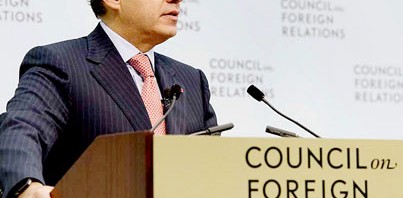
The Mexican position has been even more puzzling since Calderon took office in 2006 and started a brutal confrontation with the Mexican drug cartels that left over 60,000 casualties, 25,000 disappeared and over 200,000 displaced. Internally, Calderon defended fiercely his hardcore War on Drugs policies, while abroad, he has repeatedly admitted that “market-oriented approaches” should be considered. He even declared on September 24, 2012, at the Council on Foreign Relations: “ Let’s be honest, I don’t see any [solution] other than the regulation of drugs in the global marketplace, starting here, in the United States.” (“Seamos honestos: no se me ocurre otra que no sea la regulación de las drogas en el mercado global, empezando por aquí, por Estados Unidos”). It should be noted that the last two former Mexican Presidents, Vicente Fox and Ernesto Zedillo are both active drug policy reformists.

Mexican president Felipe Calderon term ended on December 1st, and the position of his successor Enrique Peña Nieto is still unclear. Peña Nieto was invited at the White House on November 27, and the recent legalization of marijuana in Colorado and Washington was on the agenda, even is nothing transpired. While he reiterated his personal opposition to legalization, in a Time interview published on November 27, Peña Nieto acknowledged that it may be time to reassess the War on Drugs and called for a hemispheric debate on its effectiveness. According to Peña Nieto, state legalization “creates certain distortions and incongruences, since it’s in conflict with the [U.S.] federal government… That will impact how Mexico and other countries in the hemisphere respond.” He even raised the possibility that Mexico itself may legalize marijuana.

On the other side of the Atlantic, Portugal and Spain have some of the most liberal drug policies in the world. Portugal, where all drugs have been decriminalized in since 2000, is held as the poster-boy of drug policy reform, while cannabis clubs are legal in Spain, with the blessing of the Spanish Supreme Court.

So, what does the prospect of a UN summit on drug policy means for the drug policy reform movement, and what can be expected from it? There have been after all quite a few similar events since the Adoption of the 1961 Single Convention on Narcotic Drugs. Will 2016 be the year when reality finally sinks in within the international community that drug prohibition has failed and that it is time to look for more sustainable alternatives? There are good reasons to believe so.

The 1971 Convention on Psychotropic Substances set lofty goals of complete eradication of drug use, toned down to a 50% reduction within 10 years in 1988, a goal reiterated in 1998, but abandoned altogether in 2008 amidst growing restlessness within the UN community. Furthermore, the “soft on drugs” label is rapidly losing its stickiness as the political risk of drug reformist positions is plummeting rapidly. Drug policy reform may even start turning into political asset in some circumscriptions, as was the case in Washington this November, when most of the Democrat political establishment lined up behind the legalization initiative.

As the consensus behind the War on Drugs starts crumbling, and as countries start breaking ranks and rejectthe dominant approach to drug policy altogether, the international community will see reduced opportunities for reprisals and sanctions. Uruguay’s intention to legalize marijuana under state control has been met with rather muted UN opposition so far. Sanctions against Uruguay will be hard to justify if similar sanctions are not imposed on Washington and Colorado, a prospect not even remotely likely, and may just galvanize regional rancor. Other Latin American countries might emulate the Uruguayan model, with neighboring Argentina a real potential candidate.

In the US, the number of medical marijuana states is likely to reach 20 in 2013 as proposals are set to be presented to several state legislatures, including New Hampshire, Illinois and New York. Rhode Island, Maine, Vermont, and Massachusetts, as well as Oregon and Montana may also try to adopt full marijuana legalization through their legislatures, while a legalization initiative is already on the drawing board in California. The battle has even been brought to the US Congress, with a bipartisan bill that would enable the states to make their own marijuana laws. The bill is probably still symbolic at this stage, and stands very little chances, but it may be a harbinger of things to come.

Embroiled in a deep economic and financial crisis, Europe is staying relatively on the sidelines on drug policy issues, even though (or maybe because), European drug policies are generally leaning on the liberal side and drug abuse is substantially lower there than in the US.

Ultimately, the fate of the 2016 special session lies most likely in Washington DC. The US has been the initiator, main architect and chief sponsor of the prohibitionist approach for over a century, and has over the years imposed her prohibitionist policies to the rest of the world. All current international treaties on illicit drugs having been produced and backed by successive US administrations over the past 50 years, a complete U-turn seems unlikely. But with 18 states and the district of Colombia in oblique violation of the international treaties and Colorado and Washington now squarely confronting them, the “tough on drugs” stance is increasingly untenable. Unless it reverses its attitude and draws the lessons from a century of failed prohibitionist rule, the US will be increasingly stuck between a rock and a hard place and her prohibitionist-in-chief posture will become more and more indefensible.

I have argued for quite some time that drug policy reform will be achieved by cracking the US prohibitionist backbone through the combined internal pressure from the states and external pressure from the US allies, principally, in Latin America. In a truly historic year for drug policy reform, the pieces of the global drug policy reform puzzle appeared to be falling into place one by one in 2012, and the US resolve seems to be faltering. The Obama administration appears hesitant after the decisive victories for marijuana legalization in Colorado and Washington. By intensifying the crackdown on medical marijuana over the past few years, Obama brought the War on Drugs to the Caucasian community, which may have further galvanized support for legalization. Whether hidden agenda or law of unintended consequences, it clearly narrowed the administration’s margins of maneuver and crackdowns on the newly legalized marijuana states may backfire even more, further stiffening support for legalization.

While the 2016 special session could easily be derailed, if drug policy reformists, especially in Latin American and within the US, use the next three years to keep resolutely pushing for reform, we may see the emergence of a global coalition and a new global consensus on drug policy. This is an opportunity that reform activists cannot afford to waste.

Jeffrey Dhywood
Investigative writer,
Author of “World War D – The Case against prohibitionism, roadmap to controlled re-legalization”

“World War-D” on Amazon: http://www.amazon.com/dp/0984690409/

www.world-war-d.com
Facebook page: http://www.facebook.com/worldward
Twitter: @JDhywood
jd (at) world-war-d.com

Further readings

http://www.sre.gob.mx/en/index.php?option=com_content&view=article&id=1756:the-un-general-assembly-adopts-mexicos-resolution-on-international-cooperation-against-drugs&catid=27:archives&Itemid=64

http://www.insightcrime.org/news-briefs/un-debate-global-drug-policy

http://www.druglawreform.info/en/un-drug-control/item/3980-governing-the-global-drug-wars
Petición de apoyo a la legalización controlada de marihuana en Uruguay

[emailpetition id=”2″]

Click here for English version

El gobierno uruguayo anunció el 20 de junio que enviaría una iniciativa de ley para la legalización de la venta de la mariguana (la posesión y uso ya son legales en este país). Si se aprueba esta ley, Uruguay sería el primer país en el mundo en establecer un mercado legal para la mariguana; esto sería un cambio paradigmático mayor ya que rompería el tabú, cuestionaría leyes internacionales existentes y sentaría un precedente único. En el últimos año, Uruguay también ha estado debatiendo la posibilidad del cultivo de la mariguana para uso personal. Si ambas medidas se aprueban esto sería un gran paso adelante.
Sabemos que vendrá mucha presión en contra del gobierno uruguayo para que abandone este proyecto de legalización, tal como se hizo contra Guatemala y sus vecinos en febrero de este año. No podemos correr el riesgo de que Uruguay abandone la iniciativa por la presión de quienes no desean hacer un cambio.
Al firmar la carta por debajo, se la enviará con su firma al Presidente José Mujica y los dos principales partidos de oposición.
Recuerde: En este momento, la iniciativa es sólo una propuesta que requiere la discusión y aprobación parlamentaria. Para aquellos quienes opinen que la iniciativa no va lo suficientemente lejos o que le da demasiado control al gobierno, piensen que el Presidente Mujica y su gobierno están enfrentando una batalla cuesta arriba con el muy seguro linchamiento por parte del gobierno norteamericano. No hay en este momento, ninguna seguridad de que la iniciativa sea aprobada por lo que debemos apoyarla.
Nosotros podemos hacer la diferencia.
Por favor comparte con tus conocidos y amistades este blog en Facebook, Twitter , otros medios sociales y por correo electrónico

También puedes twittear a:
• Presidencia de Uruguay: @SCpresidenciauy
• Senador Jorge Larrañaga, @guapolarranaga, líder de Alianza Nacional
• Pedro Bordaberry @PedroBordaberry, presidente del CEN Colorado y quien fuera ministro de Industria y Turismo en el gobierno de Jorge Batlle, primer jefe de estado en proponer la legalización de las drogas en 2000
Para leer más sobre la iniciativa de ley: http://www.presidencia.gub.uy/wps/wcm/connect/Presidencia/PortalPresidencia/Comunicacion/comunicacionNoticias/gabinete-seguridad-presento-paquete-15-medidas-promover-convivencia-ciudadana
La declaración a medios de la presidencia uruguaya: http://medios.presidencia.gub.uy/jm_portal/2012/noticias/NO_E582/Estrategia.pdf
Para leer más sobre el Presidente Mujica: http://en.wikipedia.org/wiki/Jos%C3%A9_Mujica

Conviértete en un activista mejor informado!
Apoya la reforma global de la política de drogas!
Pida su propia copia de “World War-D”, el libro de referencia sobre el prohibicionismo, sustancias psicoactivas y la reforma de la política de drogas (disponible solamente en Ingles por el momento)!

Jeffrey Dhywood

Autor de investigación y análisis de “World War D – The Case against prohibitionism, roadmap to controlled re-legalization”

Twitter: @JDhywood

Facebook: http://www.facebook.com/worldward


Petition in support of the controlled legalization of Marijuana in Uruguay

[emailpetition id=”1″]

Haga clic aquí para versión en español

On November 15, the government of Uruguay submitted to its parliament a proposal for the legalization of the sale of marijuana under state control (possession and use of marijuana is already legal in Uruguay). The project would also legalize the cultivation for personal use of up to 6 plants of cannabis. If adopted, Uruguay would become the first country in the world to establish a controlled marketplace for marijuana.

The project has already been approved by the Officialista Party, who holds a majority in the lower chamber, and is not submitted for comments to the opposition party. It is noteworthy that the major opposition parties have themselves asked for legalization of cultivation for personal use in the past.

President Mujica has scheduled a month-long national debate on his proposal.  We cannot afford to drop the ball on Uruguay.

When you sign the letter underneath, it will be sent with your signature to President José Mujica and the two major opposition parties. Please share this blog  post on Facebook, on Twitter and other social medias or by email.

Remember: This is just a proposal for the time being, and it needs to go thru parliamentary approval. For those you who think that it doesn’t go far enough, that it gives too much control to the government, just think about the uphill battle President José Mujica and his government are facing, and the expected US government’s stonewalling. There is absolutely no guarantee that this proposal will go thru, which is why we need to show our support.

For more impact, you can also tweet to the following:

Presidency of Uruguay: @SCpresidenciauy

Senator Jorge Larrañaga, @guapolarranaga, leader of Alianza Nacional

Pedro Bordaberry, @PedroBordaberry, President of the CEN colorado, was minister of Tourism and Industry in the Government of Jorge Batlle, the first head of state in the world to call for the legalization of all drugs in 2000, shortly after taking office.

Become a better informed activist and support global drug policy reform! Order your own copy of “Word War-D”, the reference book on prohibitionism, psychoactive substances and drug policy reform!

Learn more about the proposal: http://www.desdeelmarmol.com/2012/11/ley-sobre-regulacion-de-la-cadena.html

Learn more about President José Mujica: http://en.wikipedia.org/wiki/Jos %C3%A9_Mujica

Jeffrey Dhywood

Investigative writer,
author of “World War D – The Case against prohibitionism, roadmap to controlled re-legalization”

Download a free 42 pages excerpt of  “World war-D”

Twitter: @JDhywood
Facebook: http://www.facebook.com/worldward

Drug legalization debate brought to the UN General Assembly

The 76th UN assembly opened its doors in New York yesterday, Monday September 24, and for the first time ever, drug legalization will be brought up by no less than three Latin American heads of state.

Both Guatemalan and Colombian presidents have scheduled talks on Wednesday and both have already announced their intention to bring up the issue of global drug policy reform.  Guatemalan president Perez Molina has been the most forthcoming, and announced his intention to ask for a global dialog about new approaches to the fight against drug trafficking, including drug legalization. He will also request a revision to the Single Convention on Narcotic Drugs of 1961 as amended by the 1972 Protocol.  Perez Molina reiterated that the 50 years old war on drugs has failed and that it is time to look for more viable alternatives.

Colombian president Santos has been more ambiguous, and while he has been building up expectations for his upcoming talk at the UN, he also reminded that drug trafficking is punished by death penalty in many parts of the world. Let’s hope this is not what he means when he talk about “grabbing the bull by the horns”.  More likely, Santos is contrasting the two extreme approaches of free-market and death sentencing to the current failed policies. While he has been hinting for a while his support for controlled regulation, so far, he has failed to take a resolute stand.

The case of Calderon is more puzzling. Yesterday, September 24, the Mexican president, whose term ends on December 1st, conceded: “ Let’s be honest, I don’t see any [solution] other than the regulation of drugs in the global marketplace, starting here, in the United States.” (“Seamos honestos: no se me ocurre otra que no sea la regulación de las drogas en el mercado global, empezando por aquí, por Estados Unidos”).  He then lamented the 60,000 deaths caused by his own militarization of the fight against narco-trafficking. Where was he for the past 6 years? Will Calderon join the exclusive but growing club of retired heads of states asking for drug policy reform? As it seems that his market approach epiphany dates back to 2011 at least, one wonders why he didn’t act on it while he was in position to do so. As for his successor Enrique Peña Nieto, he has been wavering back and forth and his position seems hard to pinpoint, but as recently as Monday September 4th, he has been encouraged by Calderon himself to explore other alternatives, the codeword for legalization.

It is significant that the debate is brought up by three conservative, well-respected heads of state with impeccable credentials, representing countries that have paid a very high price in the war on drugs. While it is doubtful that the UN discourses about drug policy reform could result in any concrete action in the near future, it still marks a significant shift, especially as the UN Assembly is an opportunity for multilateral exploratory contacts that may coalesce down the line into a coalition of the willing to legalize.  Santos will meet in New York with UK Prime Minister David Cameron, who advocated drug policy reform before assuming office, but backed off since then. The path to global drug policy reform must pass through the UN sooner or later. This could be the exploratory stage of the process.

Santos has repeatedly affirmed his support for controlled legalization, always adding the caveats that legalization can only work globally, that it cannot be implemented unilaterally, and that he doesn’t want to take the lead of a coalition for legalization. Still, someone will need to bite the bullet and take the lead sooner or later. Perez Molina has tried to assume this role since taking office last January, but Guatemala is a clout-less, small impoverished country emerging from a brutal civil war; it was considered a pariah state plagued by human right abuses and systemic corruption until very recently. Molina was met with staunch opposition by his immediate neighbors Nicaragua, Honduras and El Salvador. Only Costa Rica responded favorably to Perez Molina’s initiative, who also got the ambiguous support of Colombia. Drug legalization was discussed at the April 15-16 OAS (Organization of American States) Summit in Cartagena, Colombia, but such discussion didn’t go much further than the acknowledgment that legalization is a valid point of discussion. As usual, a commission has been created to study drug policy alternatives, with a report scheduled for publication in June 2013; considering that the report will need the US and Canadian seal of approval, expectations shouldn’t be set too high.

Bottom-line: as Perez Molina is acutely aware, a Latin American coalition for drug policy reform won’t go anywhere without Colombia and Mexico onboard, and Latin America is the only part of the world where global drug policy reform can be initiated. Nevertheless, even if a lot remains to be done, we must acknowledge the astounding progress made since January of this year. A taboo has undoubtedly been broken; drug policy reform has become an almost mandatory topic at international meetings involving Latin America countries. Tiny Uruguay is debating the legalization of marijuana under state control; after having been dubbed the Switzerland of Latin America, Uruguay could very well become the Portugal of Latin America. The prospect of marijuana legalization in Uruguay has been met with surprisingly tepid opposition from the UN and the US, who might secretly welcome a sort of social and regulatory laboratory in this prosperous, non-strategic country with a long tradition of independence and great human rights records.

The November elections in the US could also be a game-changer if marijuana legalization initiatives are approved in Colorado and Washington State as polls seem to indicate. Such a move would most likely embolden Latin America.

Finally, we should keep our eyes open for the 22nd Ibero-America Summit, November 16 – 17 2012 in Cadiz, hosted by Spain and attended by Portugal and most Latin American countries. Portugal and Spain having some of the most liberal drug policies in the world, this summit should offer a favorable environment for an open debate on drug policy reform. Scheduled after the November US election, it might embolden Colombia and Mexico to take more assertive positions, especially if marijuana legalization initiatives succeed in Washington and/or Colorado.

Jeffrey Dhywood
Investigative writer,
Author of “World War D – The Case against prohibitionism, roadmap to controlled re-legalization”

Download a free 50 pages excerpt of  “World war-D”

Facebook page: http://www.facebook.com/worldward

Follow me on Twitter: @JDhywood

Become a better informed activist and support global drug policy reform! Order your own copy of “Word War-D”

  • The reference book on the War on Drugs and prohibitionism
  • A guide to psychoactive substances and substance abuse
  • A blueprint for global drug policy reform and controlled legalization

(Click here to order “World War-D” from Amazon)

If you agree with our views, please share this post to support our cause. Send it to at least 5 of your friends, post it on social networks, on your blogs, etc.

Further reading:

http://www.publinews.gt/index.php/felipe-calderon-habla-de-regular-drogas-en-onu/

http://m.eltiempo.com/politica/los-puntos-claves-del-discurso-de-juan-manuel-santos-en-la-asamblea-general-de-la-onu/7979960/1

http://www.elperiodico.com.gt/es/20120925/pais/218373/

http://www.guatemala.gob.gt/index.php/2011-08-04-18-06-26/item/1581-migrantes-y-pol%C3%ADtica-de-lucha-contra-las-drogas-entre-temas-del-presidente-p%C3%A9rez-molina-ante-asamblea-general-de-la-onu

Drug legalization debate intensifies in Latin America

The state of drug policy Reform in Latin America

Latin America has been (and still is) the hardest-hit region by the War on Drugs. It shouldn’t come as a surprise that it is the part of the world with the most vigorous debate about drug policy reform as governments look for alternatives to the failed policies of the War on Drugs. The debate is hampered by the long-entrenched prohibitionist credo and extreme pressure from the big Northern neighbor. According to Mexican president Felipe Calderon though, there was only one consensus at the April 15th Summit of the Americas: that the drug policy debate needs to be open to all alternatives.

Long confined to somewhat rarefied academic circles and the ultra-select ex-presidents club, the debate has now moved into the mainstream and is regularly capturing headlines; the taboo has been broken. Presidents don’t wait anymore for retirement before speaking out and discussion is finally leading to action. Even church leaders and Archbishops are joining the drug-reformist camp.

Last January, Guatemalan president Otto Perez Molina famously threw a stone in the war on drug murky pound and has stuck to his guns ever since. He boldly threw the debate into the April OAS meeting and is now ready to present his controlled regulation proposal to the 76th UN assembly in New York on September 26. He plans to use the platform to further advance the idea with other heads of state.

Meanwhile, the OAS (Organization of American States) will invest $2.4 million to investigate alternatives to the current fight against drug-trafficking and study the feasibility and the potential social and economic impact of legalization. A commission of experts will present its finding at the OAS General Assembly, in Antigua, close to Guatemala City, where the Perez Molina’s proposal will be discussed in details. It is of course anybody’s guess of what will be left of the committee’s recommendations after its report has been revised by the US and Canadian censors.

Tiny Uruguay, often dubbed the Switzerland of Latin America, threw itself on the map last June when President Jose Mujica and his government announced their intention to legalize marijuana under state control. The marijuana legalization project is now in the parliamentary pipeline and is being debated as we speak. What is remarkable here is that both the governing party (Frente Amplio) and its opposition (Partido Nacional) both agree on the failure of prohibitionism around the world. Of course, for people living in the US, it is unthinkable that democrats and republicans may agree on anything beyond blind allegiance to the failed War-on-Drugs policies. But if they agree on the diagnostic, the two parties diverge on the cure.  It should be noted that marijuana regulation has been on the Uruguayan parliamentary agenda in one form or another for almost two years, with various schemes being debated, including legalizing the cultivation for personal use and the current proposal for state regulation.

With a population of barely 3.5 million, Uruguay has the highest per capita income, highest literacy rate and lowest crime rate in Latin America, but it had the recent misfortune to be located on one of the new transit routes to Europe via West Africa and has been somewhat plagued by an invasion of pasta (cocaine-base). No need to say, Mujica’s proposal is generating a vigorous debate within the country and raising eyebrows and getting close attention in the surrounding countries, especially Argentina, Brazil and Colombia.

Argentina and Brazil are debating decriminalization of all drugs for personal use. The Supreme Court of Argentina already ruled unconstitutional the criminalization of drug use in 2009. In Colombia, the capital city of Bogota is debating an ambitious harm reduction program based on substitution and maintenance.  Most Latin American countries have decriminalized drug use and possession for personal use, or are in the process of doing it.

It seems that no regional meeting or summit can take place nowadays in this part of the world without drug policy debate on the agenda. The 22nd Ibero-America Summit, November 16 – 17 2012 in Cadiz, Spain, bringing together the heads of state from Latin America, Spain and Portugal, is no exception. Drug policy and the fight narco-trafficking will be front and center at the meeting of interior ministers.

Drug policy reform is clearly on the move, and as I predicted in my book “world War-D”, Latin America is taking the lead. The battle is far from over though and there is a long and arduous road ahead of us. Although they have been toying with it for a while, the heavyweights, Colombia and Mexico, are still on the sideline. Mexico for one, is caught in a time warp since the July 1st presidential elections and up to the December official transfer of power. Caught in his own controversies, President-elect Enrique Peña Nieto has mostly kept silent, trying to stay out of the limelight and sticking to non-controversial issues.

As always, your support can make a difference. As a reminder, we have 2 ongoing actions:

Petitions of support of Guatemalan president Otto Perez Molina http://signon.org/sign/support-guatemalan-president.

Petition in support of marijuana legalization in Uruguay: http://www.world-war-d.com/2012/06/22/petition-in-support-of-the-controlled-legalization-of-marijuana-in-uruguay/

If you haven’t done so yet, please sign these petitions. Help spread them through social networks and emails.

Thank you for your support.

Jeffrey Dhywood
Investigative writer,
Author of “World War D – The Case against prohibitionism, roadmap to controlled re-legalization”

Download a free 50 pages excerpt of  “World war-D”

Facebook page: http://www.facebook.com/worldward

Follow me on Twitter: @JDhywood

Become a better informed activist and support global drug policy reform! Order your own copy of “Word War-D”

  • The reference book on the War on Drugs and prohibitionism
  • A guide to psychoactive substances and substance abuse
  • A blueprint for global drug policy reform and controlled legalization

(Click here to order “World War-D” from Amazon)

If you agree with our views, please share this post to support our cause. Send it to at least 5 of your friends, post it on social networks, on your blogs, etc.

Further readings:

http://www.eltiempo.com/politica/lucha-contra-drogas-se-tomara-cumbre-iberoamericana-de-jefes-de-estado_12232229-4

http://www.latercera.com/noticia/mundo/2012/09/678-483568-9-oficialismo-y-oposicion-uruguaya-reconocen-fracaso-de-prohibicion-de-marihuana.shtml

http://www.telesurtv.net/articulos/2012/09/19/presidente-de-guatemala-propondra-en-onu-despenalizacion-de-la-droga-7325.html

http://www.laopinion.com/OEA_invertira_2.4_millones_dolares_para_despenalizacion_de_drogas .

http://www.drogasmexico.org/?nota=7288