Felipe Calderon: “Let’s be honest!”

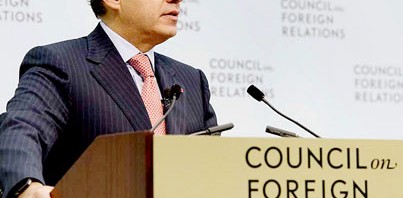
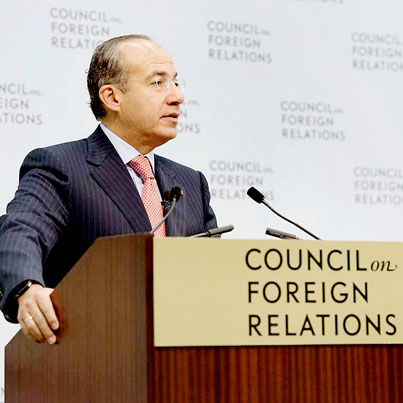
Felipe Calderon at the Council on Foreign Relation
On September 24, the Mexican president conceded: “ Let’s be honest, I don’t see any [solution] other than the regulation of drugs in the global marketplace, starting here, in the United States.”
In June 2012, I personally delivered a copy of my book “World War D” to President Felipe Calderon during his visit to La Paz, Baja California Sur.

I don’t know if President Calderon read my book, but few months later, on September 24, 2012, Mexican president Felipe Calderon, whose term ended on December 1st, 2012, declared at the Council on Foreign Relations:

“ Let’s be honest, I don’t see any [solution] other than the regulation of drugs in the global marketplace, starting here, in the United States.” (“Seamos honestos: no se me ocurre otra que no sea la regulación de las drogas en el mercado global, empezando por aquí, por Estados Unidos”). 

Como presidente “tienes la obligación de analizar otras alternativas para parar el flujo de dinero hacia las manos de los criminales”, reconoció Calderón. Eso incluye “alternativas de mercado”, añadió, sin dar más detalles. “La otra es entregar el poder del Estado. Pero no puedes decir eso como gobierno”, dijo.

Coincidence? 

It is worth remembering that Calderón himself initiated the militarization of the fight against drugs in Mexico.

Calderon also lamented the 60,000 deaths caused by his own militarization of the fight against narco-trafficking. Where was he for the past 6 years? Will Calderon join the very exclusive but fast-growing club of retired heads of states asking for drug policy reform? As it seems that his market approach epiphany dates back to 2011 at least, one wonders why he didn’t act on it while he was in position to do so.

Prohibition in a market economy

The funding dogma of capitalism and the basic principle of market economy, the law of supply and demand, is inescapable. It must be obeyed one way or another and there is absolutely no way to tamper with it. If it cannot be obeyed within the framework of legality, it will find other means and if supply creates its own demand, its corollary is also true that demand will create its own supply, which is why the supply reduction strategy of the war on drugs is condemned to fail and the demand reduction strategy is just as doomed.

The drive for mind-alteration, either through psychoactive substances or otherwise is deeply ingrained in human nature as the study of the brain reward/pleasure system clearly indicates. Whether we like it or not, this basic drive creates a demand for psychoactive substances. As a result of globalization and prohibitionist policies, this demand increasingly is not being adequately met by legal psychoactive substances as consumers want to diversify from alcohol and tobacco. The thrill of forbidden fruit adds to the appeal of illegal substances while the shadow economy in which black market thrives give rise to sub-cultures revolving around the commerce and use of such substances. Such sub-cultures are increasingly the dominant culture in many parts of the world from the US-Mexican border zone to West Africa or Central Asia and even in Northern California.

Drug trafficking arose as an unavoidable consequence of prohibition’s attempt at violating the inescapable law of supply and demand. Prohibition and drug trafficking grew in symbiosis, mirroring each other like the yin and the yang of the same entity, and as the war-on-drugs became harsher and harsher, the law of supply and demand mandated a reciprocal market response as drug traffickers became tougher and tougher and ever more powerful. Harsher enforcement also creates scarcity, which increases profit to the illegal trade.

Prohibitionism not only attempts to violate the basic principle of capitalism, it created a capitalist aberration by promoting the emergence of a class of super-capitalist, the drug traffickers, operating unencumbered by the rule of law and who became criminals first and foremost as a direct consequence of the illegal status of their activity. Far from me to try to exonerate drug traffickers; lots of them are clearly ruthless criminals in their methods and their means. But Al Capone was right when he said that he was just a businessman filling up a market need. In a sense, black markets are the rawest and purest form of capitalism, unregulated, unbridled capitalism, without check and balances, without the rule of law, unburdened by taxes and drug traffickers are the purest types of capitalist.

Because their activity, the commerce of illegal substances, is illegal, conflicts arising from their activity cannot be resolved in a legal manner as drug traffickers are denied the rule of law to regulate their activity. Thus an activity that had been artificially and somewhat arbitrarily declared illegal and therefore criminal led to an explosion of real crime as violence became the only mean for resolution of conflict arising from the commerce of the illegal substances. If a dealer doesn’t get paid, his gun is his collection agency. Violence is the only way to resolve disputes. Territories are protected by guns, not by contracts and lawyers, and conquered at gun point. Agreements are enforced by guns, not by judges. Violence is the rule of law.

The use of violence in conflict resolution has a dual purpose, a punitive role and a dissuasive role, which logically leads to ever-escalating violence. The level, the intensity, the savagery even of drug violence has been spiraling out of control as a logical consequence of its dissuasive function. Rothstein was a gentleman compared to his trainees and disciples Lucky Luciano and his peers; Al Capone and Luciano were altar boys compared to Pablo Escobar; Escobar is a saint compared to Los Zetas, the Gulf Cartel or La Familia Michoacana. It is hard to imagine how the current wave of gory and gruesome atrocities can be surpassed but I am afraid we will find out soon enough.

Drug trafficking organization try to reduce the negative effects of violence on their activity and set up hierarchies, rules and alliances, but when hierarchies are shattered, rules are broken or alliances fall apart, violence takes over. Violence tends to grow with instability in a shadow economy and as law enforcement efforts become more successful at disrupting drug trafficking networks, narco-violence increases exponentially. As newcomers rush to fill the void created by arrested or killed drug kingpins, turf battles rage.

As for corruption, it arises inevitably at the unavoidable interface between the black-market and the open economy. Borders need to be crossed, merchandise needs to be transported, raw material and equipment need to be purchased, crops need to be protected, money need to be laundered, profits need to be turned into legitimate businesses, real estate, mansions and yachts. For all of these and myriad other operations, the beautifully simple formula, the magic bullet is “plomo o plata”; greed and fear are the motivators; they are the cement that seal loyalties, the universal facilitator and lubricant. For the black market, corruption is like a tax, part of the cost of doing business.

Black market naturally thrives in chaos. Whenever it needs to interface with the open economy, it logically seeks the path of least resistance. In a global world, it seeks the weakest states, the failing states, further destabilizing them and them taking advantage of the power vacuum to take further control. Central America, East and West Africa are particularly vulnerable.

Market economy naturally favors profit-maximizing strategies, which in the case of illegal substances, will favor substances with the highest bang for the bulk as substances need to be concealed at all time and bulk comes with a severe handicap. Unsurprisingly, drug dealers much prefer heroin or cocaine to marijuana. There is virtually no market for coca leaf outside its traditional area and the market for raw opium for direct consumption has evaporated in most of the world and receding rapidly in India, Pakistan and Iran, sadly replaced by heroin.

After over 100 years of prohibition, more than 20% of the US adult population use illegal drugs on a regular basis and close to 50%, including the current and last two former US presidents have used at least once in their lifetime. So, it is quite obvious by now that drug prohibition is not practically and efficiently enforceable; the prohibitionist model for controlling the use of psychoactive substances is clearly flawed and a paradigm shift is urgently needed. It is time to ask the simple but fundamental question: “Can organized societies do a better job than organized crime at managing and controlling psychoactive substances?” If we cannot respond with a resounding Yes! To this fundamental question, then we must despair of our societies and their governments. Besides, the vast majority of psychoactive substances, including the two deadliest, tobacco and alcohol, are already legal.

The use of psychoactive substances is an issue of personal choice, while substance abuse is a health issue, which has been turned into a criminal issue with catastrophic consequences. The real crime is to give control of the illegal drug marketplace to organized crime.

Jeffrey Dhywood
Investigative writer,
Author of “World War D – The Case against prohibitionism, roadmap to controlled re-legalization”

Download a free 50-page excerpt: http://www.world-war-d.com/.

“World War-D” on Amazon: http://www.amazon.com/dp/0984690409/
Facebook page: http://www.facebook.com/worldward
Follow me on Twitter: @JDhywood
Become a better informed activist and support global drug policy reform!
Order your own copy of “Word War-D”

  • The reference book on the War on Drugs and prohibitionism
  • A guide to psychoactive substances and substance abuse
  • A blueprint for global drug policy reform and controlled legalization

Media inquiries- book reviews – speaking engagements: contact promo@world-war-d.com

Czech President Signs Medical Marijuana Bill; US Congress Warming up to Marijuana Policy Reform

President Vaclav Klaus signed into law Friday a bill that legalizes medical marijuana in the Czech Republic.

The bill had heavy support from both ruling political parties. It was overwhelmingly passed by the Czech Senate last month by a 67-2 vote after already passing the Lower House of Parliament in December.

The Czech Republic has some of the most liberal drug laws in the world, and is one of the most marijuana-friendly countries in Europe. Possession of up to 15 grams of marijuana, 1.5 grams of heroin, 1 gram of cocaine and 4 tablets of ecstasy and cultivation of up to 5 plants are a misdemeanor offense since January 2010.

Bipartisan group of Congressional members seek to reclassify marijuana for medical use, allow for ‘fair’ trials

It used to be that congressmen Barney Frank and Ron Paul, both now retired, had pretty much the monopoly of drug policy reform in the US Congress, working together on a number of stillborn legalization bills. On the heel of the November marijuana legalization in Colorado and Washington, and as polls reveal strong support for state rights to decide their own marijuana policy, overwhelming support for medical marijuana and majority support for outright legalization, Congress appears to be finally catching up with its constituents. More than a dozen Members of Congress co-introduced legislation on February 14, that would reclassify marijuana for medical use and provide federal defendants the right to use state law compliance as evidence in medical marijuana trials, a right they’re currently denied.

Rep. Earl Blumenauer (D-OR) introduced H.R. 689, the “States’ Medical Marijuana Patient Protection Act,” that aims to reschedule marijuana, allows states to establish production and distribution laws without interference by the federal government, and removes current obstacles to research. H.R. 689 co-sponsors include Representatives Cohen (D-TN), Farr (D-CA), Grijalva (D-AZ), Hastings (D-FL), Honda (D-CA), Huffman (D-CA), Lee (D-CA), Moran (D-VA), Nadler (D-NY), Polis (D-CO), Rohrabacher (R-CA), and Schakowsky (D-IL). “Nineteen jurisdictions have passed laws recognizing the importance of providing access to medical marijuana for the hundreds of thousands of patients who rely on it, it is time for the federal government to respect these decisions, and stop inhibiting safe access,” said Congressman Blumenauer.

Rep. Sam Farr (D-CA) introduced the “Truth in Trials Act,” which seeks to overturn the prohibition on medical marijuana evidence in federal court.

Both bills were introduced in anticipation of the National Medical Cannabis Unity Conference, “Bridging the Gap Between Public & Policy” on February 22-25 in Washington, D.C. The conference will highlight medical and legal experts, Members of Congress and other policymakers. Monday, February 25 will be a lobby day with hundreds of patient advocates meeting their Members of Congress and asking for reform.

The move is part of a scheduled flurry of congressional activity from the expanding marijuana reform supporters in Congress. Representative Blumenauer had previously introduced on February 6 “The Marijuana Tax Equity Act” that would create a taxation framework for marijuana similar to that in place for tobacco and alcohol. On the same day, Representative Jared Polis, (D. Colorado) introduced the Ending Federal Marijuana Prohibition Act, that would call on the federal government to regulate marijuana much like it does alcohol.

While most of these bills are probably a long shot, they definitively heat up the debate and build up momentum for future battles. Even if President Obama is not likely to sign anytime soon a medical marijuana bill, not to mention recreational, the climate for marijuana policy reform has definitively changed on the banks of the Potomac, warming up considerably since last November.

As for the Obama administration, it has remained remarkably silent on the topic since November, which would actually be the best possible strategy if Obama had any genuine interest in marijuana policy reform. In the currently highly-charged and partisan climate that still prevails in the US Congress, the Obama administration would be well-advised to stay on the sideline and let Congress assume the initiative on such a charged issue. The issue even has some nominal bi-partisan support, which would most likely evaporate if Obama was to take a firm position on it.

Obama is the first US president who has the potential to really understand the issues of illegal drugs in a very personal and intimate way. While he consistently appeared reform-inclined prior to his election, his positions have been far more ambiguous since taking office. Was he careful not to be labeled as soft on drugs? By cracking down on marijuana dispensaries, did he intend to bring the War on Drugs to the Caucasian community? After all, if Caucasians were targeted even half as much as African Americans, the War on Drugs would most likely be over pretty soon.

There is little doubt that Obama truly gets the futility of criminalizing users as well, probably, as small time dealers; is he ready to concede the inanity of prohibitionist policies altogether? Drug policy activists generally expect some substantial changes during his second term. His administration’s response, or the continued lack of it to the Washington and Colorado legalization will undoubtedly give a clear indication of his deep-rooted intentions.
Jeffrey Dhywood
Investigative writer
Author of “World War D – The Case against prohibitionism, roadmap to controlled re-legalization”
www.world-war-d.com
“World War-D” on Amazon: www.amazon.com/dp/0984690409/
FaceBook: http://www.facebook.com/worldward
Twitter:@JDhywood
LinkedIn: linkedin.com/in/jdhywood


Breva historia del narco-trafico en Colombia

Antecedentes

A finales de 1965, debido a la prolongación de la guerra en Vietnam los soldados del ejército norteamericano debieron soportar intempestivas emboscadas y sangrientos e intempestivos ataques que mantuvieron en vilo a los miembros de sus filas. Esta situación de zozobra indujo al consumo de sustancias psicotrópicas principalmente de marihuana y heroína lo que a la postre se tradujo en adicción.

Estas drogas en exceso eran provistas por los mismos vietnamitas como una manera de afectar sus tropas. Satisfecha la demanda del consumo, se cree que el excedente era enviado hacía los Estados Unidos, en bolsas y ataúdes que aparentemente contenían solamente los cadáveres de militares muertos en combate y tenían como destino final las principales ciudades norteamericanas,.

Al lado de miles de soldados repatriados, la juventud estadounidense optó también por la generalización del consumo como repudio a la guerra. El movimiento hippie y todos los valores contraculturales de la denominada “Generación Beat’ fue una de las tendencias más acogidas por una mocedad que odiaba la violencia y que temía ser en listada, y que prefería abstraerse en el rock psicodélico, la revolución sexual, la marihuana de origen mexicano, cocaína y el LSD.

La rentabilidad que arrojaba el comercio de la droga impulsó una mafia heredada del tráfico de licor, de los juegos clandestinos y del dominio callejero que, con raíces sicilianas, experiencia en Chicago y contactos con los recientes exiliados cubanos, buscó en México y luego en Colombia el producto necesario para surtir su mercado.

Los aún incipientes carteles de traficantes de cocaína entre Bolivia, Chile y Perú, pasando por Colombia y con destino final las ciudades de Miami y new York, eran colombianos que habían empezado con el cultivo y tráfico de marihuana  procesada  hacía los Estados Unidos de América y tenían su asiento principalmente en el norte de Colombia, en la ciudades de Barranquilla y Santa Marta, capitales de los Departamentos  del Atlántico y Magdalena y en el Departamento de la Guajira. Este fue realmente el antecedente al tráfico de cocaína hacía el gran mercado norteamericano.

Los primeros carteles del cultivo, procesamiento y tráfico de cocaína.

A principios del siglo XX, la marihuana había sido introducida desde la frontera sur a los Estados Unidos por inmigrantes mexicanos con destino a la ciudad de Nueva Orleáns para suplir la demanda de grupos de latinoamericanos de origen antillanos y de negros norteamericanos amantes de los géneros musicales del blues y el jazz.

La ampliación del mercado de la marihuana llevó el producto colombiano, muy apetecido por su “alta calidad’, en variedades como el “Moño rojo’ y la “Santa Marta Gold”, a suplantar el producto mexicano que impero hasta finales de los años sesenta.

Familias antioqueñas y costeñas las rutas marimberas fueron rápidamente establecidas y monopolizadas por traficantes paisas y costeños, algunos de ellos, antiguos con contrabandistas de electrodomésticos desde el vecino país de Venezuela y traficantes de esmeraldas. Estas rutas marítimas partían en barcos alquilados del Golfo de Urabá y de La Guajira con grandes cantidades de marihuana procesada. Inicialmente a estos traficantes no les importaba ser más que mayoristas desde Colombia, sin intervenir en las redes de distribución norteamericana.

Fruto de las jugosas ganancias, adquirieron posteriormente aviones que partían en vuelos nocturnos de pistas clandestinas o de algún aeropuerto de la costa atlántica.  Pronto, la pugna por el control de estas rutas y del mercado mayorista trajo consigo una brutal vendetta entre estas familias.

Pronto el cannabis colombiano fue sustituido progresivamente, a finales de los sesenta, por la marihuana producida directamente en los Estados Unidos y una nueva variedad importada de Jamaica.  Además, el movimiento hippie ya no seguía ejerciendo el mismo poder paradigmático y la juventud norteamericana entra en otras búsquedas más frenéticas y más consumistas. En este escenario busca sustancias más fuertes. Es aquí cuando irrumpe en los mercados principalmente de Miami y new York, con una creciente demanda, la cocaína como una droga sicotrópica de gran poder estimulante que empieza a tener gran preferencia en la juventud norteamericana.

Para entonces, enlaces colombianos en ciudad de México e inmigrantes en Estados Unidos conformaron con otros latinos las primeras redes de distribución de cocaína en estas ciudades. Cabe aclarar que inicialmente Colombia no tenía narco – cultivos ni era procesadora de cocaína. Esta era comprada en los mercados de Bolivia y de Perú. Se hizo famosa la variedad peruana denominada como “escama de pescado” considerada de “alta pureza”.

Jaime Caicedo, “El Grillo”, figura entre los primeros narcotraficantes colombianos. En el año de 1976, de manera premonitoria a las vendettas entre narcotraficantes colombianos, cayó acribillado en un bar de música de mariachis, de su propiedad, ubicado en el populoso sector de la Avenida 5ª con carrera 39 de la ciudad de Cali, a manos de un subteniente amigo.

A la vez, irrumpe en el escenario del narcotráfico en Colombia Benjamín Herrera Zuleta, el “Papa negro de la cocaína”, quién se fugara de su prisión en Atlanta y de  Estados Unidos, para huir a Colombia y posteriormente a Chile y Perú para retomar sus actividades de tráfico de drogas. Luego de re-apresado en Perú, deportado a Estos Unidos y de adquirir su libertad bajo fianza, regresa a Colombia para asociarse con Martha Upegui, la “Reina de la Coca’’ en Medellín y para contactar nuevos traficantes en la ciudad de Cali.

Con el auge del consumo en la Florida y el fortalecimiento de los carteles nacientes de Cali y Medellín, la ciudad de Miami es escenario de las más sangrientas vendettas entre colombianos y exiliados cubanos por quedarse con el control del mercado del tráfico, que quedo finalmente en manos de colombianos…

Inicialmente Colombia no era productora de cocaína, por tanto, no había narco-cultivos ni laboratorios para su procesamiento. Estos laboratorios estaban establecidos principalmente en el norte de Chile y los plantíos en Perú y Bolivia. La cocaína provenía ya procesada de Perú.  Colombia era un “puerto de escala” en su tránsito hacía México teniendo como destino final el mercado de consumidores en grandes ciudades norteamericanas inicialmente en Miami y New York como lo explicamos antes. Luego el consumo se hizo extensivo a todo el territorio norteamericano. Y lo que es peor, Colombia empieza a pasar de proveedor de este gran mercado a ser progresivamente un gran consumidor.

Hay un análisis importante. El hecho de que inicialmente los carteles de la cocaína fuesen solo de tráfico, significo que el único dominio territorial consistía en el control y seguridad de pistas clandestinas para el aterrizaje de pequeñas aeronaves. Esto tenía aún un bajo perfil y contaban con la complicidad de algunas autoridades aeronáuticas y de policía. Las luchas eran solo entre las “familias’ por quedarse con las rutas y el control del mercado del lucrativo negocio.

Posteriormente los carteles se fueron consolidando económica y militarmente y ampliaron la cobertura de su negocio e incursionaron en el cultivo y procesamiento de la coca en cocaína. Como consecuencias de este trascendental hecho para esta empresa criminal están, que empezaron a sacar del mercado como intermediarios a los productores peruanos y chilenos, y a los distribuidores cubanos en Miami y a quedarse prácticamente con todas sus jugosas ganancias. Esto provocó un aumento desproporcionado de poder económico. El “bajo perfil’ ya no sé pudo mantener mas.  Se empieza a ser evidente el impacto significativo en el imaginario colectivo de los sectores populares inicialmente del Valle del Cauca y de Medellín, sedes de los nacientes carteles de la droga. Se va configurando la subcultura del narcotráfico. Con el cultivo de coca y el procesamiento y tráfico de cocaína, se demanda gran cantidad de fuerza de trabajo y aparece entonces en el paisaje urbano de ciudades intermedias del Valle del Cauca y de Antioquia el “traqueto” al servicio de los capos, que empieza a hacer ostentación de poder. Cali se convierte en la primera ciudad latinoamericano en la demanda y consumo de autos lujosos como las denominadas “narco – toyotas”.

Otra consecuencia significativa es que se empiezan a necesitar tierras para el cultivo del insumo natural principal que es la planta de coca. Esto se empieza a dar en los lugares más apartados de la geografía nacional por ser más seguros. El campesinado seducido por el dinero fácil y los bajos riesgos entra progresivamente en la sustitución de cultivos sanos por narco – cultivos. En sus lugares circundantes aparecen entonces los ‘raspachines’ o cosechadores de hoja de coca, los laboratorios para su procesamiento perfectamente camuflados y todos los demás efectos sociales colaterales, como los ejércitos particulares, la prostitución, etc.

Los primeros Capos de los carteles de Calí y Medellín.

 Los capos más destacados de la historia del cultivo, procesamiento y tráfico de drogas de Colombia inicialmente hacía Estados Unidos y posteriormente hacia Europa son en su orden: Pablo Escobar Gaviria (1951-1993), jefe del Cartel de Medellín, Gonzalo Rodríguez Gacha (su más destacado socio), los hermanos Jorge Luis, Juan David y Fabio Ochoa Vázquez y Carlos Lehder Rivas (su más importante estratega de las rutas aéreas y marítimas). De otro lado, estaban los hermanos Gilberto y Miguel Rodríguez Orejuela, jefes del Cartel de Cali y su principal aliado José “Chepe’ Santacruz.

 La diferencia del precio de compra en Perú, Bolivia y Chile para los traficantes colombianos, el precio de la droga puesto en Colombia, posteriormente en México o directamente en manos de los distribuidores en estos Unidos era astronómica. Produjo lo que se podría denominar como una “descomunal plusvalía extraordinaria”.

Pablo Escobar no penetro las instituciones políticas, por el contrario, asumió una imagen paternalista traducida en una cuantiosa inversión en casas de interés social, escuelas y centros deportivos en sectores populares, lo que le sirvió para garantizar un amplio respaldo social las comunas más pobres en Medellín y Envigado. Igualmente le sirvió de plataforma ideológica para crear su movimiento político “Medellín sin Tugurios”. Pablo Escobar se dedico entonces a participar de manera activa, audaz y estratégica, en política hasta hacerse parlamentario como representante a la Cámara. El sabía muy bien que el fuero parlamentario ofrecía una protección adicional frente a la extradición. Carlos Lehder, el principal estratega de Pablo Escobar  en el diseño de rutas en Centroamérica y el Caribe para la “mercancía” creo el “Movimiento Latino” para apoyar políticamente a Escobar y en su lucha contra la extradición. La lógica de Gonzalo Rodríguez Gacha se caracterizó por ser de desarrollo rural y fortalecimiento militar. Su dinero lo invirtió en esmeraldas, oro y tierras. También tuvo sus pretensiones políticas con un radio de acción en el Magdalena medio. Allí creo y co-financio el Movimiento de Renovación Nacional “MORENA”, aliado con liberales y paramilitares.

Los Rodríguez Orejuela, por su parte tuvieron una lógica diferente. Se dedicaron de manera cautelosa a la inversión financiera y a penetrar y corromper las instituciones de los sectores privado,  financiero, político y del Estado, como una manera efectiva el “lavado” de astronómicas sumas de dinero en dólares de Estados Unidos hacia Colombia.

En su objetivo principal de control y mantenimiento del negocio del tráfico ilícito de drogas y en su lucha contra la extradición los carteles desarrollaron procesos de negociación con el Estado y también estrategias de tipo jurídico y militar centrada en una lucha “sin cuartel’ de carácter terrorista en retaliación, por la firma del tratado de extradición del Estado colombiano con Estados Unidos, y en un acto desesperado, indiscriminado y criminal contra todo el pueblo colombiano.

Las alianzas militares de los carteles de la cocaína en su lucha contra la guerrilla. 

 El primer frente común de carácter militar conformado por los carteles de la droga fue el autodenominado “Muerte A Secuestradores ( MAS), a raíz del secuestro a manos del grupo guerrillero urbano Movimiento 19 de Abril (M-19) de la hermana de Jorge Luis Ochoa Vásquez, Marta Nieves.  El desenlace rápido y exitoso de este eventual frente militar  sentaron a la postre las bases de una unión permanente entre los viejos y nuevos ricos (narcotraficantes)  hacendados – ganaderos y las fuerzas militares y de policía, en su lucha frontal contra un enemigo común: los grupos guerrilleros, principalmente el de las autodenominadas Fuerzas Armadas Revolucionarias de Colombia (FARC), que amenazaban su libertad y seguridad personal y en general toda su infraestructura y logística y finalmente empezaban a incursionar peligrosamente, para sus intereses como nuevos carteles del cultivo, procesamiento y tráfico de cocaína.

Este fue el origen de los grupos paramilitares o de autodefensa en Colombia. Tanto los grupos paramilitares, los carteles de la droga pioneros y posteriormente los emergentes, unidos con algunos partidos y movimientos políticos fortalecieron sus nexos y su accionar hasta llegar a niveles insospechados de corrupción institucional del Estado, violación de los derechos humanos y de muerte

LAS EMERGENTES BANDAS CRIMINALES “BACRIM’ Y EL NUEVO CAPITULO EN LA LUCHA CONTRA EL NARCOTRÁFICO.

Luego de que fueron desvertebrados los carteles del procesamiento y el tráfico de cocaína de Cali, Medellín y posteriormente el del Norte del Valle del cauca,  quedo un mercado abierto y una demanda latente. Esta situación propicio la proliferación en todo el país de bandas criminales emergentes, como una nueva amenaza dado que los carteles grandes y las Frac y las AUC habían sido desmanteladas. Las ‘bacrim’, con estructuras y aparatos militares para captar estos mercados, han implicado una nueva y seria amenaza para la seguridad de Colombia, para el continente  y para el mundo entero. Estas organizaciones que son responsables de continuar con el cultivo, procesamiento y tráfico de la cocaína, siguen utilizando enlaces y rutas de la droga en Centroamérica y en México que tienen como destino final las redes de distribuidores en la parte del oeste de Estados Unidos y el sur de la Florida, usando aviones muchas veces registrados en Miami y a otras partes del mundo, se han unido es su accionar para hacer un frente común contra el creciente accionar de las autoridades colombianas que cuentan en su lucha con el apoyo del gobierno norteamericano.  Esta situación ha dificultado la acción de las autoridades porque no están concentradas en un solo sitio y no cuentan con un solo líder. “Está claro que las bandas criminales están encabezadas por narcotraficantes ‘pura sangre’, que antes de llegar al mundo de las bacrim hicieron parte de los antiguos carteles de la droga”, dijo el General de la policía de Colombia Óscar Naranjo. Como fenómeno agregado las ‘bacrim’ siguen generando violencia y corrupción y el surgimiento de nuevos capos de las drogas en Colombia,

Las autoridades de Colombia y estados Unidos, más concretamente en el Estado de la Florida se han comprometido con agentes que trabajan en Colombia y fiscales especializados para trabajar solamente en estos casos. En Miami, hay una oficina que está encargada de facilitar el acceso a los fiscales de Colombia y de ayudar con información de los que están detenidos en Miami para los investigadores en Colombia.

En el blog de Fred L. Álvarez, fechado el 3 de septiembre de 2011, se describe “En el sur de la Florida, EE UU, un grupo élite de fiscales estadounidenses tiene asignado un objetivo: ayudar a desvertebrar las bandas criminales en Colombia. Esta unidad está dedicada a apoyar autoridades colombianas en la persecución de narcotraficantes

La captura recientemente de 30 personas en Colombia, ligadas a la organización del ‘Loco Barrera’, es el primer resultado de esa misión, que, según el fiscal del Distrito Sur de Florida, Wilfredo Antonio Ferrer, es el “nuevo capítulo en la lucha contra el narcotráfico”.

Casi en secreto- dice un reportaje del periódico colombiano El Tiempo- y desde hace varios meses esa unidad de fiscales, en llave con la Policía colombiana, ha abierto decenas de expedientes por narcotráfico contra los miembros de las bandas.

En este momento hay 100 investigaciones y 56 capturados, que podrían enfrentar penas hasta de 60 años, según mencionó ayer la DEA.

En septiembre 2 de 2011, en entrevista concedida a este mismo diario colombiano, el fiscal norteamericano Ferrer consideró que para las autoridades de Estados Unidos en la lista de los narcos más buscados aparecen, desde hace varios meses, además de ‘Diego Rastrojo’ y ‘los Comba’, ‘el Loco Barrera’, los hermanos Juan de Dios y Dairo Antonio Úsuga, jefes de ‘los Urabeños’ y ‘Valenciano’ y ‘Sebastián’, de la ‘oficina de Envigado’.

Investigadores lograron seguir la pista a cada uno de los socios del ‘Loco’, que develaron la estrategia utilizada para sacar a la semana no menos de tres toneladas de cocaína del país. Se detectó que una parte de la red se dedicaba a inyectar dinero para que la otra comprara y/o alquilara aeronaves en Miami, Fort Lauderdale, Bahamas, Belice, Guatemala y Honduras. Ingresaban las aeronaves a Colombia utilizando registros de compañías de papel, con las que obtenían planes de vuelo legales hacia Centroamérica y Venezuela, pero que eran aprovechados para sacar los cargamentos de droga. Esta misma facción tenía la labor de contactar pilotos (8 fueron capturados en esta operación) para que, desde aeropuertos de Medellín y Montería y del Estado Apure (Venezuela), transportaran la cocaína para los carteles mexicanos de Sinaloa, del capo ‘Chapo Guzmán’, y de Ismael. La Policía detecto que, por ejemplo, desde el Cauca la red transportaba los cargamentos en camiones con caletas hidráulicas hasta Medellín y Montería, de donde salían los vuelos. Sin embargo, la mayor cantidad de droga salía por el oriente del país, entre Meta y Vichada, que ha sido fortín del ‘Loco Barrera’.

Desde allí, la droga era llevada por tierra hasta el estado Apure, desde donde, por pistas clandestinas, los vuelos partían hacia el Caribe y luego a Centroamérica y México. Estas estructuras eran lideradas por cuatro “peces gordos” capturados en esta operación: Álvaro Suárez Granados, Jaime García García, Óscar Humberto Sierra Pastrana y Miguel Antonio Monroy Ramírez, quienes se iniciaron en los antiguos carteles de la mafia y que ahora eran socios del ‘Loco Barrera’.

La policía de Colombia ha llegado a identificar a los denominados como nuevos ‘peces gordos’ del narcotráfico a: Jaime García García, alias ‘Rafa’. Señalado socio capitalista. Aportaba para compra de aviones y controlaba pistas clandestinas en Venezuela: a Oscar Humberto Sierra, alias ‘Micky Sierra’, que estaría dedicado a conseguir pistas clandestinas en el vecino país y contactos en aeropuertos nacionales; a Álvaro Suárez Granados, alias ‘Coco’, presunto socio capitalista de la red. Quién se inició como piloto de Pablo Escobar y luego de Miguel Rodríguez Orejuela; a Miguel Antonio Monroy, alias ‘Barbas’, a quién se le sindica de adquirir aeronaves en el exterior y pagar a pilotos y de  montaba empresas fachada.

Finalmente, desde el 23 de agosto de 2011, las bandas criminales “bacrim” que se identifica como “Águilas Negras” del Bloque Capital DC” ha incursionado con fuerza en Bogotá amenazando de muerte, mediante panfletos, a los integrantes de 12 grupos de  teatro de los sectores populares de las localidades de Bosa, Kennedy, Tunjuelito y Ciudad Bolívar, dándoles la orden perentoria de abandonar la ciudad de manera en un plazo de 8 días. Los delincuentes acusan a los artistas de realizar actividades en favor de los derechos humanos.

Carlos Alberto Diaz Sanclemente

http://www.facebook.com/cdiazsanclemente
 

Di si al debate

Empresarios y Académicos de Nuevo León opinan sobre la legalizacion de las drogas en una carta nacional dirigida a todos los mexicanos, al Presidente y al Congreso de la Unión proponiendo un cambio de paradigmas sobre la guerra contra las drogas, un debate serio y un cambio de leyes. http://www.disialdebate.com

Publicaron una carta nacional dirigida a todos los mexicanos, al Presidente y al Congreso de la Unión proponiendo un cambio de paradigmas sobre la guerra contra las drogas, un debate serio y un cambio de leyes.


Drug policy on the move: 2013 as it unfolds

2012 appears increasingly as a turning point in the drug policy debate, and the trend seems to be accelerating as we move into 2013. I prepared a presentation of the major events of 2013 in the world as they unfold. The presentation is in reverse chronological order to highlight the most recent developments, and is followed by a recap of the major milestones of 2012 and the events that led to these major breakthroughs. I will keep updating it as we go.

Please let me know if I missed anything. Feel free to add your own events in the comments. And of course, like and share on social networks.

Jeffrey Dhywood
Investigative writer,
Author of “World War D – The Case against prohibitionism, roadmap to controlled re-legalization”

Download a free 50-page excerpt: http://www.world-war-d.com/.

“World War-D” on Amazon: http://www.amazon.com/dp/0984690409/
Facebook page: http://www.facebook.com/worldward
Follow me on Twitter: @JDhywood
Become a better informed activist and support global drug policy reform!
Order your own copy of “Word War-D”

  • The reference book on the War on Drugs and prohibitionism
  • A guide to psychoactive substances and substance abuse
  • A blueprint for global drug policy reform and controlled legalization

Media inquiries- book reviews – speaking engagements: contact promo@world-war-d.com

Reforma de la politica de drogas: Un repaso al 2012

2012 fue un año crucial y un momento crítico para la Política Global de Drogas. Un repaso de los eventos mayor de 2012 desde las declaraciones del Presidente de Guatemala Otto Perez Molina hasta la victoria por la legalización de la marijuana en Colorado y Washington.

Jeffrey Dhywood
Investigative writer,
Author of “World War D – The Case against prohibitionism, roadmap to controlled re-legalization”

Download a free 50-page excerpt: http://www.world-war-d.com/.

“World War-D” on Amazon: http://www.amazon.com/dp/0984690409/
Facebook page: http://www.facebook.com/worldward
Follow me on Twitter: @JDhywood
Become a better informed activist and support global drug policy reform!
Order your own copy of “Word War-D”

  • The reference book on the War on Drugs and prohibitionism
  • A guide to psychoactive substances and substance abuse
  • A blueprint for global drug policy reform and controlled legalization

Media inquiries- book reviews – speaking engagements: contact promo@world-war-d.com


Drug policy reform moving forward after holidays pause.

Support for marijuana legalization gaining momentum in the US

In the aftermath of the decisive victories for marijuana legalization in Colorado and Washington, recent polls conducted since then reveal a rapidly widening support for medical marijuana as well as full legalization, and this support is now reaching into the Southern states that have traditionally been strongly opposed even to medical marijuana.

A recent survey conducted in Hawaii, birthplace of president Obama and land of the “Choom Gang” and its “choomwagon”, reveals a stunning 78% support for a “tightly regulated dispensary system” and 57% support for controlled legalization. Hawaii is on a short list of states that might consider the state legislature route to marijuana legalization.

In New Hampshire, a state scheduled to legalize medical marijuana in 2013, support is 68% to 26% opposed, while support for full controlled legalization is 53 to 37 http://www.mpp.org/states/new-hampshire/2013NewHampshireResults.pdf

In Arizona, where the voters approved state’s MMJ program has been under siege from the start, support for MMJ stands at 59% while support for controlled legalization is 53 to 44. Arizona is expected to have a marijuana legalization initiative on the 2014 or 2016 ballot, although it would probably be a long shot.

More interesting, voters in North Carolina and West Virginia seems to be warming to the idea of medical marijuana, 58 to 33 in North Carolina, and 53 to 40 in conservative West Virginia.

Lawmakers in Maine, Massachusetts, New Hampshire, Rhode Island and Vermont have already promised to introduce marijuana legislation in 2013, and other are expected to follow, including  Alaska, Arizona, Hawaii, Michigan, Minnesota, Missouri, Montana, Nevada, Oregon and Virginia. Most of the proposals are likely to never even make it to a vote, and others will be defeated or vetoed; still, 2013 is likely to deliver a few more controlled legalization states, while the block of medical marijuana states will most certainly pass the 20 count and may even reach 25, at which point a majority of the US states would have legalized medical marijuana. A Medical Marijuana Bill was introduced in Kansas on January 16.

Meanwhile, on December 19, the National Institute on Drug Abuse released the results of the 2012 Monitoring the Future Survey, which indicate a continued rise in teenage use of marijuana with daily use at 6.5% among high school seniors and last month use at nearly 23 %. The survey also notes a continued decrease of alcohol and tobacco use, which seems to indicate that marijuana is displacing these substances among high-school students. Whether or not this is positive trend is of course a matter of debate, as alcohol is often viewed as more harmful than marijuana. It shows nonetheless that prohibition is failing to curb teen use and alternatives are long overdue.

Update on drug policy reform in the world

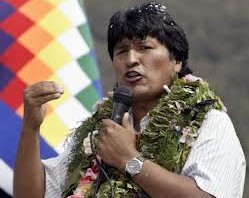
Bolivian president Evo Morales set an important international precedent on Friday January 11, 2013, when his country rejoined the United Nations’ 1961 Single Convention on Narcotic Drugs with reservations, as the U.N. recognized the traditional use of the coca leaf and Bolivians’ right to chew the coca leaf in their territory.

In Guatemala, President Molina is meeting with Amanda Feilding of the Beckley foundation who will present the Beckley’s report “Paths for Reform”, containing “the Beckley Foundation’s suggestions regarding the steps which the Guatemalan government might now take to maintain the momentum of the President’s initiatives. It complements the report Illicit Drug Markets and Dimensions of Violence in Guatemala, which analyses Guatemala’s situation under the current policies.“

President Molina has been pushing since taking office as year ago for alternatives to the current prohibitionist policies. Guatemala, together with its neighbor Honduras and El Salvador have been taken over by Mexican drug cartels and turned into a battleground between the brutal and much feared Zetas and the Sinaloa cartel fighting for the control of key transit routes to the US.

In Mexico, narco-violence keeps spreading even if the body count may have stabilized or even somewhat decreased with a relative normalization of the Ciudad Juarez territory where the Sinaloa cartel seems to have gained the upper hand. Regions that had been relatively spared until now are being affected  and violence is reaching Mexico City where 22 bodies were discovered on January 12-13 and another 16 bodies in nearby Toluca. Newly inaugurated President Enrique Pena Nieto has said that reducing violence in Mexico is one of his government’s top priorities and has set an ambitious agenda that may stay “letra muerta” (dead words) unless he can get the cooperation of state and local authorities. His position on the War on Drugs and drug policy reform is as fuzzy as ever. The debate may be starting though, as the PRD opposition party is presenting a legalization proposal that stands very little chance of approval but will certainly bring up the debate to the governmental level.

In the UK, the All-Party Parliamentary Group for Drug Policy Reform issued a report on January 14, recommending sweeping changes to current drug policies and decriminalization of all drugs with legalization of the least dangerous ones. The report was promptly rejected by Prime Minister David Cameron, claiming that the current approach to drugs in the UK is “the right one and is working”, making one wonder what he has been smoking lately. Meanwhile, his Deputy Prime Minister and partner in the ruling coalition, Nick Clegg, declared that the “drugs war is lost” and “current drugs policy have not been delivering for a while”.

On January 16, The British Medical Association, a professional association and registered trade union for doctors, published a comprehensive report on drug policy in the UK making clear the role they feel medical practitioners should play, not only in improving care of problem drug users, but also in becoming involved in the political debate over drug policy. http://www.beckleyfoundation.org/2013/01/16/doctors-make-themselves-heard-in-the-drug-policy-debate/

In France, 150 to 200 marijuana social clubs (clubs of growers for personal use) decided to come out of the closet in February and apply for official registration. Cannabis social clubs have been legal in Spain for quite some time already.

Jeffrey Dhywood
Investigative writer,
Author of “World War D – The Case against prohibitionism, roadmap to controlled re-legalization”

Download a free 50-page excerpt: http://www.world-war-d.com/.

“World War-D” on Amazon: http://www.amazon.com/dp/0984690409/
Facebook page: http://www.facebook.com/worldward
Follow me on Twitter: @JDhywood
Become a better informed activist and support global drug policy reform!
Order your own copy of “Word War-D”

  • The reference book on the War on Drugs and prohibitionism
  • A guide to psychoactive substances and substance abuse
  • A blueprint for global drug policy reform and controlled legalization

Media inquiries- book reviews – speaking engagements: contact promo@world-war-d.com


El presidente Lázaro Cárdenas intento de legalizar las drogas en febrero de 1940

From Gonzalo Lopez, this interesting historical fact:
” LA COSA NOSTRA EN MÉXICO”
de JUAN ALBERTO CEDILLO. 
Para enfrentar el aumento de las adicciones, el gobierno del presidente Lázaro Cárdenas se deshizo del modelo policíaco que las combatía y decretó una “revolucionaria” medidapara   su época: legalizó las drogas en el último año de su mandato. El 17 de febrero de 1940 se publicó en el Diario Oficial de la Federación el nuevo Reglamento Federal de Toxicomanía,  con el cual el Estado pretendía crear un monopolio para la venta de fármacos prohibidos, los cuales serían distribuidos a los adictos a su costo; de esa manera se evitaría que los   compraran a los narcotraficantes.
El proyecto se había presentado meses atrás al gobierno de Estados Unidos, explicando a sus funcionarios que “era imposible acabar con el tráfico de drogas debido a la corrupción de la policía y de los agentes especiales, y por la riqueza e influencia política de algunos traficantes”. El cerebro detrás de esa medida fue el doctor Leopoldo Salazar Viniegra, un respetado investigador médico que se desempeñaba como director del Departamento de Salubridad Pública. Salazar Viniegra argumentó ante funcionarios estadounidenses “que sólo había una manera de frenar el tráfico de narcóticos en México”, y era que el Estado
creara un monopolio para la venta de fármacos prohibidos a los drogadictos, a precio del costo para sacarlos de la influencia de los narcotraficantes.
Sin embargo, Washington consideró las medidas de Salazar como un “peligro” para Estados Unidos y comenzó a cabildear ante el gobierno mexicano para que fuera removido de su cargo. Primero intentaron desprestigiar al funcionario, quien tenía estudios de medicina en la Sorbona de París y gracias a sus investigaciones como neurólogo y en la psiquiatría era considerado “el Pasteur mexicano”. En esa época realizaba una serie de investigaciones para demostrar que la mariguana no era una droga adictiva, que era inofensiva y que no producía los daños que se le atribuían. Para demostrar sus conclusiones, en una ocasión   distribuyó cigarrillos entre los miembros del Comité Nacional de Drogas Narcóticas, sin que supieran que estaban hechos con mariguana. Posteriormente escribió en uno de sus   reportes que “no sucedió nada anormal entre los fumadores”. Además, él personalmente fumaba mariguana para que sus interlocutores observaran los cambios en su conducta y se  convencieran de que no sucedía nada “anormal”.
Salazar también había realizado estudios con alrededor de 400 presos mexicanos, a quienes les surtió gratis cigarrillos de mariguana durante un tiempo; de esa manera sacó a los narcotraficantes de las cárceles de la ciudad de México. Sus investigaciones también se realizaron en el hospital psiquiátrico conocido como “La Castañeda”, donde laboró durante 14 años. En ese manicomio repartía cigarrillos a los internos para que fumaran la yerba en “grandes cantidades”. Salazar afirmaba “que la planta no era dañina para el ser humano y que nadie había perdido la razón con su uso”. Su plan consideraba legalizar su siembra y cobrar un impuesto a los agricultores, como sucedía con el tabaco.
Sin embargo, Washington rechazó esas aseveraciones; sus diplomáticos protestaron contra el plan del médico mexicano, el cual consideraron como peligroso, ya que podría propiciar  una “invasión” de droga desde la frontera sur. No obstante, a pesar de la oposición de los diplomáticos estadounidenses, en México se autorizó el nuevo reglamento, el 17 de febrero
de 1940, el cual permitió a los médicos proporcionar drogas a los adictos, principalmente morfina, a los precios que el Estado mexicano pagaba por ella; un funcionario del Departamento de Salud supervisaría la cantidad que se les suministraba. Los adictos deberían estar registrados ante las autoridades, y con su número de registro y una receta de su doctor podrían adquirir drogas en cualquier farmacia de la capital del país. Sin embargo, los farmacéuticos  no podían vender drogas más allá de las autorizadas para fines terapéuticos.
El Departamento de Salud también creó dispensarios para atender a los “toxicómanos, a quienes no consideraba delincuentes sino enfermos”. En esas clínicas el adicto pagaba su dosis y se le suministraba la droga cuando él la solicitara. El primer dispensario para drogadictos comenzó a operar en la Calle Versalles del centro de la capital; a él acudieron alrededor de 700 personas. Pagaban 20 centavos por la inyección, y entre 10 y 12 pesos por cinco dosis diarias. Salazar afirmó que gracias a ese dispensario, Lola la Chata estaba perdiendo alrededor de 2 600 pesos diarios.
Los burócratas de Washington (verdadera Sede de La Cosa Nostra) cabildearon en contra de Salazar con funcionarios mexicanos afines a su punto de vista, quienes pronto se aliaron con ellos. Posteriormente gestionaron ante la Oficina Central Permanente del Opio, con sede en Ginebra, para que impusiera un embargo de medicamentos a México. Esa dependencia era la única responsable de autorizar a ciertos países la siembra y producción de opio y morfina para fines médicos, productos  que el gobierno mexicano compraba, principalmente, en Inglaterra y Holanda, a pesar de que en Sinaloa existía una gran siembra de amapola; no obstante, el país no podía procesar el opio para crear sus propios medicamentos. A los pocos meses el embargo comenzó a tener efecto, y la principal firma farmacéutica de la República Mexicana, la empresa alemana Casa Beick Félix y Cía., comenzó a resentir la escasez de narcóticos terapéuticos.
Harry A. Anslinger informó al gobierno de Lázaro Cárdenas que “el embargo sería levantado cuando México aprobara la suspensión del reglamento”.
Debido a las presiones de Estados Unidos, el 3 de julio de 1940 el Diario Oficial publicó “el Decreto que suspende la vigencia del Reglamento Federal de Toxicomanía”. La medida se justificó argumentando que debido a la guerra en Europa había grandes dificultades para la adquisición de las drogas. La diplomacia de Washington se había anotado un trascendental triunfo ante sus homólogos mexicanos, enterrando la revolucionaria medida con la que se pretendía combatir al narcotráfico en México. A partir de entonces regresó el modelo policíacoque perdura hasta nuestros días.
Tomado del libro:
 “La Cosa Nostra en México (1938-1950)”, Juan Alberto Cedillo, pgs. 24-27.Grijalbo 2011.

The story behind “World War-D”

I just completed the following interview for “A Book a Day Review” http://abookadayreviews.blogspot.com where it should be published shortly. The blog also has a nice review of “World War-D”

1)  You put an awful lot of hard work into putting this book together, and some of the chapters are very detailed and technical.  What happened that caused you to feel so strongly that the laws must change?   It’s an awful lot of work to do unless there’s a strong sense of commitment.  Was there something that happened in your life to spur you into taking on this challenge?

I got quite heavily involved into drugs back in the early 1970s and lost many people around me, including A., the woman I most loved in my live, as well as her sister D. a little over a year later. Both committed suicide as a consequence of their heroin addiction.

D. came to visit me the day before she jumped from a third-floor window. The door to my apartment in Paris was open and I had put a note on the door, asking her to just push the door as the bell didn’t work. I do not know what happened, whether she didn’t see the note, didn’t knock on the door, tried to ring the non-working bell; in any case she came to the door but didn’t come in, and she was in pain, she was desperate, looking for help, looking for comfort. In many ways this seemingly closed door that was really open was an image of our relationship and it has been haunting me ever since. I had given up drugs by then and I didn’t want to witness any more deaths, least of all D.’s.

Years later, I met their younger sister V. in the streets of Paris in a chance encounter, and we talked a long time about A. and her sister D.; she told me that A. had been pregnant but didn’t want me to know about it. She told me that D. was waiting for me to save her from herself; that she thought I was life, that I was the sun for her. Still, From London to Formenterra, from Paris to Morocco, I failed her even though I knew all along that I could save her, or could I? I was too timid and feared to impose on her, while she was waiting for me to grab her back to life, back to light, or was she? On the day of her funerals, I was walking painfully towards the cemetery, my steps and my mood getting heavier and heavier as I got closer, until I couldn’t stand it anymore and told myself “What for? She is dead now! Too many lives have been lost already.” I turned back almost running, with a feeling of elation and relief, with a weight taken off my chest; I had chosen life, I had turned my back to death. Or was I running away? Or both?

I moved to Latin America in 2000, and witnessed the region being sucked into a frightful and deadly spiral of violence and chaos because of drugs, or more precisely, because of drug-trafficking. As the carnage kept spreading, I felt the urge to do something about it, as the war on drugs is a really dreadful nonsense, an absurdity. Yes, drugs are powerful, and yes, they can be extremely destructive; I have paid a very high price in my personal life to learn this. This is precisely why prohibition is so dangerous. It is absolutely foolish and even irresponsible to relinquish the control of such powerful and potentially destructive substances to organized crime. The underlying paradigm of prohibitionism is fatally flawed.

I started writing in 2010 with a sense of urgency and commitment, plunging into my subject with dedication and even compulsion.

Reading through all the literature on the subject, I soon realized that most people look at just one facet of the topic, one piece of the puzzle. It was somewhat like the blind men trying to describe an elephant by describing the part of the elephant they are touching, the leg, the tusk, the trunk, the tail. Few and far between were courageous voices, such as Judge Jim Gray or Michelle Alexander, but even them, while looking at a bigger picture than most, were still looking at the issue from a decidedly US perspective. I wanted to go beyond. I wanted to give the full picture, I wanted to assemble all the pieces of the puzzle, and I wanted to do it from a global perspective. I set very ambitious goals for myself, and I wanted to write for the general public, not just preach to the choir. I had to make sense of this conundrum not only for myself, but for those who had never given much thought to the issue and never analyzed it with a critical mind.

Putting to good use my logician and mathematician background, I approached my topic as a complex mathematical problem that, like most real-life problems, does not have a unique solution, but rather an infinite continuum of possible outcomes under varying conditions, the problem being to define the optimized outcome and then find the proper conditions for such optimized outcome in a dynamic process.

I dug through tens of thousands of pages of studies, statistics and reports, from the UN, the WHO, the US government, the European Union, academics, researchers, activists. I was keen on choosing sources as respectable and uncontroversial as possible. I soon found out that the information, the data is all there, but lots of the conclusions are upside-down because of the flaws of the underlying dominant model, starting with the well-meaning but totally unrealistic goal of a drug-free world, the stated optimized outcome of the dominant prohibitionist model. In real life, prohibition is not practically enforceable in a free-market economy. The necessary conditions to even near such a lofty outcome can only be found in such extremes as the now defunct Soviet Union, Maoist China or Saudi Arabia, and even these most extreme words do not fully achieve this goal. Even after decades of mass incarceration of drug deviants of a scale that surpasses the Soviet and Maoist extremes, the US has miserably failed to curve the spread of substance use and abuse, just merely kicking the can around, from heroin in the 70s to cocaine in the 80s, to crack in the 90s, to amphetamines and now psychopharmaceuticals.

I started by deconstructing prohibitionism and the war on drugs and realized that in prohibition, or the War on Drugs, we are referring to “illegal drugs”, which is in fact two very distinct problems bundled together with catastrophic consequences: “illegal” and “drugs”. Once we untangle and separate these two problems, we can come up with reasonable and sensible alternatives.

I dug into the philosophical, ideological and historical origin of prohibitionism, and how it relates to the other 19th centuries totalitarian ideologies of coerced societal transformation: Communism and Fascism. I hypothesized that technological improvements such as industrial distillation of alcohol, opium smoking and the discovery of morphine or cocaine, create an evolutionary adaptative gap leading to the disease of excess called addiction. Prohibition was the wrong answer to a very real problem. It was also an alibi for more nefarious ends, mostly racial and cultural discrimination.  From then on, the history of prohibition is a downward spiral of ever diminishing returns and ever increasing mayhem and chaos. An analysis of the human, societal, economic and geo-political cost of the war on drugs clearly demonstrates that prohibitionism, by effectively giving control to criminal elements, is the worst possible form of control. Prohibition heightens the harm potential of illegal drugs by an order of magnitude and the bulk of the harm they cause derives from their illegal status.

It should be noted that there are no clear relationship between the legal status of a substance and its intrinsic harm potential, the personal and societal harm it may inflict independently of its legal status. Bundling within the same legal framework relatively harmless substances such as marijuana and ecstasy with crack cocaine and heroin has had dreadful consequences and ended up facilitating the transition from the so-called soft drugs to hard drugs.

Looking at the drug part of the problem, I look at all psychoactive substances, irrespective of their legal status, starting with a brief introduction to the workings of the brain and how it is affected by psychoactive substances. This part of my research really fascinated me as I came to realize the amazing power of the human brain. I am currently working on a follow-up book project called “the brain explained” that will expand on that section of “World War-D”, trying to make it accessible to the general public. The brain circuitry, the neurons and their connections, can be viewed as a physiological representation of our inner models of reality. Such models are usually self-reinforcing, as we typically filter in the information that reinforce our inner models and/or interpret it through the filter of our inner models. However, events in our life, powerful sensations or experiences (including psychoactive experiences), may alter our neural network and affect our inner models of reality, with unpredictable consequences, and may be life-changing, for the better or for the worse. In addition, we have the power to direct our own transformation through conscious learning (or re-learning) and awareness. Addiction is the result of such neural alterations, and recovery is a conscious re-learning or more precisely, un-learning process. Various techniques have been developed throughout the ages, such as meditation, yoga or biofeedback, to facilitate the self-transformation process.

Going back to the psychoactive substances, we must first realize and acknowledge that they have been used since the dawn of humanity, and from tea and coffee to tobacco, alcohol and psychopharmaceuticals, or even marijuana and cocaine, most people use them on a regular basis if not daily, therefore, the concept of a drug-free world is just a pipe-dream. Each culture has its own dominant psychoactive substances that typically serve as social lubricants and facilitators and may have ritualistic or religious consonances, alcohol being the dominant psychoactive substance of Western civilization. As a result of globalization, psychoactives substances have gradually expanded outside of their traditional territories. While alcohol and tobacco have conquered the planet, the traditional psychoactives from Asia or Latin America and their extracts and derivates, have been moving the opposite way, conquering the Western world and are now also spreading throughout the planet. The latest psychoactive wave to sweep the planet is led by psychopharmaceuticals, the products of technological innovations in neuroscience.

We should also acknowledge that most users of psychoactive substances use them in moderation, often with occasional episodes of abuse in special circumstances such as celebrations. Problem users, those susceptible to cause harm to themselves or to others, are a relatively small percentage of users. Trying to prevent all use of any particular substance is extremely counterproductive and it is far more efficient to focus on problem use, how to prevent it, how to minimize its associated harms.

Once we properly understand the “illegal” and the “drugs” parts of the problem, and once we split and untangle them, we can reconstruct and address each one separately. Illegality can be solved by controlled legalization, which, if properly done, will dismantle the illegal drug marketplace. Drug use per se is not an issue in and of itself; substance abuse is a medical and social issue that should never have been turned into a criminal issue.

The next step is to set reasonable and realistic goals for optimized outcome and see what type of conditions will allow reaching these goals. I propose a paradigm shift away from the unrealistic drug-free world fallacies towards more realistic goals of harm minimization. To that effect, I look at the various legal models of psychoactive substances, the alcohol model, the tobacco model, the prescription drug model, and the prohibitionist model, which, as we have already seen, is by far the worst possible form of control.  Each of the existing regulatory models has its own flaws and limitations, but we can learn from these models to design a regulatory framework that will produce the desired harm minimization outcome. The model I propose favors nudging over coercion. Acknowledging that people will use psychoactive substances whether we like it or not, I propose to nudge them towards the least harmful substances, the least harmful patterns of use, and the least harmful administration modes. I also propose to set in place alert mechanisms so that users moving towards hazardous patterns of use can receive proper help and support.

In short, my goal with “World War D” is to try answering the simple but fundamental question: “Can organized societies do a better job than organized crime at managing and controlling psychoactive substances?” which is placing the bar very low when you think about it. To that effect, I lay out a concrete, pragmatic and realistic roadmap to global controlled legalization under a multi-tier regime: “legalize, control, tax, prevent, treat and educate,” with practical and efficient mechanisms to manage and minimize societal costs.

Would A.’s and D.’s lives have been spared under a regulated marketplace model? I have no idea. It is pointless to try to rewrite the past anyway. What I know though, is that countless lives would be saved in the future if we had the courage to confront and properly manage substance abuse instead of trying to deny it into prohibition.

2)  Has there been any blowback from people who DO believe in the Drug War, and what percentage of them actually read the book all the way through?

I haven’t received any negative feedback from prohibitionists so far. I offered a copy to former UNODC director Antonio Maria Costa, who hasn’t taken me on my offer. I had some dialog with Mr Maria Costa while he was still at the helm of the United Nations Office on Drugs and Crime, but our dialog was rapidly cut short. You can see some of his comments on my website.

People rather unfamiliar with the topic have found the book eye-opening. Several people have complained that the book is too detailed and too technical, with too many references. Some admitted that they struggled with the chapter on the brain, but were glad to stick to it as it gave them a great understanding of the workings of the brain.

I really do not know how many of my readers read the entire book. This is not a novel that you read from cover to cover after all, but several people have commented that they use “World War-D” as a reference. It was even selected as a textbook for a criminology course in Southern Utah University.

I also have to admit that to the best of my knowledge, my readers have mostly come so far from the activist community or are in favor of legalization. Reaching out to the general public has been harder than I thought, but I am making headways.

3)  Are there any new updates in the situation to report since the book’s original publication?

There have been tremendous changes on the drug policy reform front, with Latin American countries leading the call for reform, and of course the states of Colorado and Washington legalizing marijuana with double digit margins. I have prepared a review of the major events of 2012 that is available at http://www.slideshare.net/slideshow/embed_code/15908266.